

Quick answer: workshop ECU reflashing means writing calibration software to a vehicle’s engine control unit (ECU) in a workshop. It can be a supplied file or part of a full custom tune, and the two are not equivalent. The quality of the result depends on how the calibration was developed and whether it was tested under load with data logging, not on the reflash itself.
A vehicle can feel more responsive after an ECU reflash, but that does not mean its calibration is working as intended under load. Understanding workshop ECU reflashing Perth drivers are offered helps you look past quick changes in feel and ask how the software was checked.
At TechTune Performance in Malaga WA, we develop and validate calibrations with dyno testing and data logging where the vehicle supports it. Here are seven things worth knowing before you book a reflash in Perth.
- A reflash is a method, not a quality guarantee: what matters is how the calibration was developed and checked.
- Generic files are a starting point: they do not automatically suit every vehicle on the platform.
- Stage labels are not standards: Stage 1 and Stage 2 mean different things at different workshops.
- Dyno testing and logging answer different questions: output versus how the engine responded.
1. What Does Workshop ECU Reflashing Actually Change?
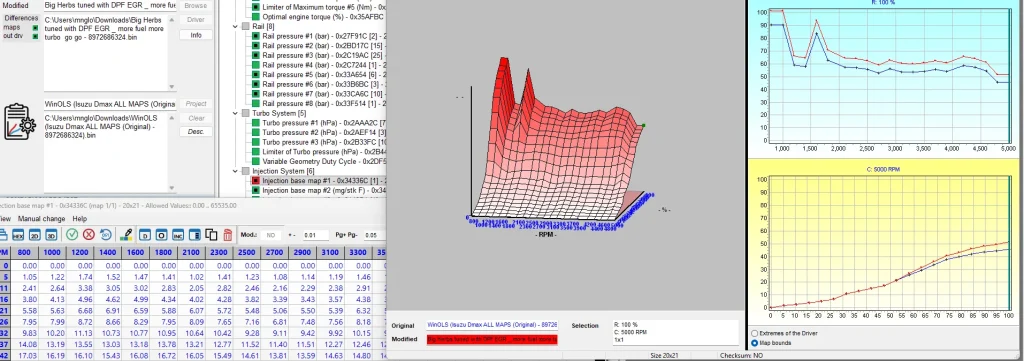
An engine control unit manages engine functions through software and calibration maps. Depending on the vehicle, these influence fuel delivery, boost control, ignition or injection timing, throttle response and torque management.
Reflashing means writing calibration software to the control unit. The process might update existing settings, apply a supplied file or form part of a detailed custom tuning process. These are not equivalent. Increasing a boost target, for example, does not mean the turbocharger can hold that target across the operating range, because fuel delivery, airflow, temperature and torque limits also influence the result.
When considering workshop ECU reflashing Perth providers offer, ask what the software changes are intended to achieve and how the provider verifies them. Our overview of ECU remapping explains how we approach this.
2. Why Should You Be Careful With Generic Calibration Files?
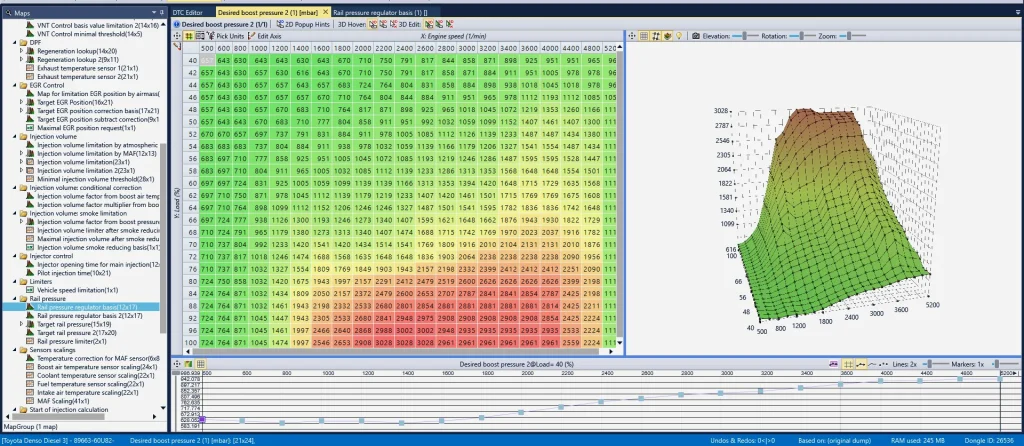
A supplied file may be designed for a particular engine, ECU type or platform. That provides a starting point, but it does not establish that the file suits every vehicle using that platform. Vehicles of the same model can differ in modifications, kilometres and condition, and changes to the turbocharger, exhaust, intake or injectors affect how the engine responds.
Some files come from automated tuning platforms. Automation is not proof of poor quality; the question is whether the resulting calibration was checked against the actual vehicle and its data. A file that looks right on paper may still need adjustment once the engine is tested. For workshop ECU reflashing Perth customers should ask whether a calibration is simply supplied and installed, or developed, assessed and refined with vehicle-specific evidence. See custom vs generic tune files for a full comparison.
3. Do “Stage 1” and “Stage 2” Labels Prove Tune Quality?
Stage 1 and Stage 2 are common terms, but they have no universal definition that guarantees a level of performance, reliability or testing. One workshop may use a stage label for a general software package, while another uses it for a specific combination of calibration changes and supporting hardware. The label does not tell you how the vehicle was tested.
Ask what changes are being made and why, whether the calibration suits the current setup, whether torque management has been considered and how the result will be validated. A custom calibration should mean more than selecting a file and writing it to the ECU.
4. Why Is Dyno Testing Important After a Reflash?
A short road drive can reveal hesitation, warning lights or poor drivability. It may not reproduce sustained acceleration, a long hill climb or heavy load. A suitable dynamometer provides a controlled environment for testing a vehicle across a selected operating range, so technicians can compare results before and after calibration changes under repeatable conditions.
Dyno testing is not a guarantee that every fault will be found, and it does not replace mechanical inspection or road testing. Its value is that it gives a structured way to examine performance under load rather than relying on first impressions. When assessing workshop ECU reflashing Perth providers, ask whether they can test under appropriate load and explain the results. If a provider says a dyno is unnecessary, ask what alternative checks they use and what those checks can and cannot confirm.
5. What Data Should Be Logged Alongside Dyno Measurements?
Dyno measurements and ECU logging provide different information. Power and torque come from the dynamometer, while supported ECU, OBD or CAN channels show how the vehicle’s control systems responded. The available channels depend on the vehicle, sensors and ECU strategy.
| Measurement or data channel | Why it matters during testing |
|---|---|
| Dyno power | Shows measured power output across the test range. |
| Dyno torque | Helps assess torque delivery and changes through the run. |
| Engine RPM | Provides a reference for comparing measurements and logged data. |
| Actual and target boost | Helps identify differences between requested and measured boost. |
| Lambda or AFR | Provides information about the air-fuel mixture where suitable measurements are available. |
| Actual and target fuel rail pressure | Helps reveal whether measured fuel pressure follows the requested value. |
| Ignition or injection timing | Shows timing behaviour relevant to the engine type and calibration. |
| Throttle and torque intervention | Can reveal ECU limits or requests that reduce delivered torque. |
| Temperature readings | Helps assess thermal behaviour where suitable sensors or channels are available. |
| Knock-related information | Can help identify potential combustion concerns on applicable engines. |
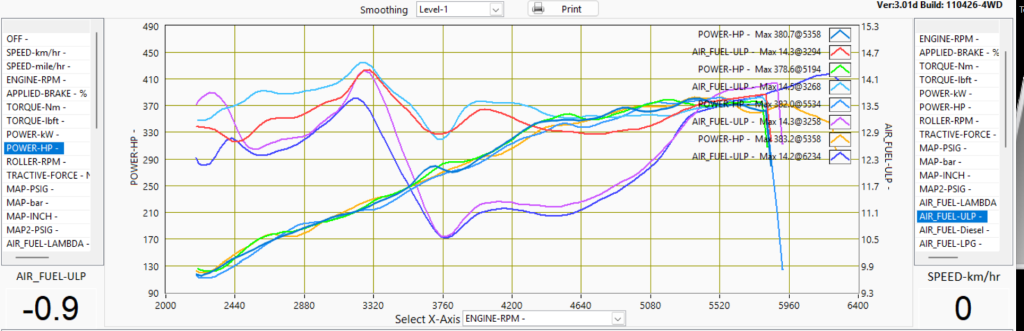
The strongest analysis compares related channels together, for example actual boost against target boost while reviewing fuel pressure, timing and torque at the same engine speed. This combined evidence helps explain why a vehicle behaves differently from what the calibration intended. Not every issue shows up in a single graph, so readings need interpreting in context. Our guide to dyno data logging in Perth goes deeper on each channel.
6. What Problems Can Appear Under Sustained Load?
Some tuning issues are hard to spot on a brief drive because they depend on load, temperature or the interaction between control systems. Boost that does not follow its target may point to a calibration or mechanical concern. A drop in fuel rail pressure under load may warrant checking the fuel supply or control system. Unexpected torque intervention can explain why a vehicle is not delivering the output the driver requests.
Surging, poor fuelling, excessive heat and limp mode can each have several causes. A calibration may contribute, but existing faults, sensor problems or unsuitable modifications can produce the same symptoms. Technicians should investigate the evidence instead of assuming every abnormal reading needs a software change, and knock detection matters on applicable petrol engines while diesels need attention to injection, boost and thermal behaviour. Our diagnostics service covers fault-finding before tuning.
7. How Can You Choose a Workshop That Tests Its Work?
Look for a provider that explains its process in plain language. These questions help:
- Is the file supplied as-is, or is the calibration developed around my vehicle?
- Will the vehicle be inspected and tested before changes are made?
- Which ECU or diagnostic channels can be logged on my vehicle?
- Will the vehicle be retested after calibration changes?
- How are unexpected readings, torque intervention or temperature concerns investigated?
- Can the provider explain the results and the limits of the testing?
Consider how the vehicle is used. A daily driver, a vehicle that tows and a modified performance car have different priorities, and a suitable calibration accounts for hardware and intended use rather than only peak output. When comparing workshop ECU reflashing Perth options, favour clear explanations and evidence of testing over broad claims about stages or power gains.
WA Compliance, Insurance and Warranty Considerations
For road-use modifications, check the official requirements. The WA Government sets out minor, simple and complex modification categories on its vehicle modifications page, and the VSB 14 National Code of Practice covers technical requirements for light vehicle modifications. Whether approval or inspection is needed depends on the vehicle and the changes, so do not assume every ECU change is treated the same way.
Any tune must still respect emissions and noise requirements, and removing or disabling factory emissions equipment is not a legitimate route to performance. Modifications can affect your manufacturer warranty and insurance, so disclose them and confirm your cover before you proceed. Results vary by vehicle, and no workshop can honestly guarantee a specific outcome before the vehicle has been assessed.
Conclusion
ECU reflashing can change engine performance, but installing a file is only one part of the process. The calibration needs to suit the vehicle, and testing helps show whether boost, fuelling, timing, torque control and other systems respond as expected under load. Generic files and stage labels are not proof that a tune has been customised or validated, and dyno measurements, logging and follow-up checks provide better evidence, although they cannot guarantee that no future fault will occur.
If you are weighing up workshop ECU reflashing Perth options, contact TechTune Performance to discuss your vehicle, modifications and intended use. Ask what testing suits your setup and how the finished calibration will be assessed. You can also see the vehicles we support.
Is workshop ECU reflashing the same as custom ECU tuning?
No. Reflashing describes writing software to the ECU, while custom tuning involves developing or adjusting calibration settings to suit the individual vehicle. The process and validation provided can vary between workshops.
Can a generic ECU file cause problems?
A generic file is not automatically unsuitable, but it may not account for a vehicle’s condition, hardware or modifications. Testing and data analysis help establish whether the calibration behaves as intended.
Is dyno testing necessary after every ECU reflash?
The appropriate testing depends on the work performed and the vehicle. A suitable dyno session offers controlled load testing, while other checks may give useful information but have different limitations. Ask the provider how the calibration is validated.
What is the difference between dyno testing and ECU data logging?
A dynamometer measures outputs such as power and torque. ECU data logging records available vehicle parameters such as boost, fuel pressure, timing and torque intervention. Reviewing both gives a more complete picture of how the vehicle behaves.
Do Stage 1 and Stage 2 tunes guarantee better performance?
No. These labels are not universal technical standards and do not guarantee a result or level of testing. Ask what changes are included, whether they suit your vehicle and how the finished calibration is checked.
Is an ECU reflash legal in Western Australia?
It depends on the vehicle and what is changed. The WA Government groups modifications into minor, simple and complex categories, and VSB 14 sets technical requirements. Emissions equipment must remain compliant. Check the current rules for your situation and speak with your insurer.
Ready For A Properly Tested Tune?
Every calibration is developed around your vehicle using controlled dyno load, live data logging and map-level validation before handover.
