
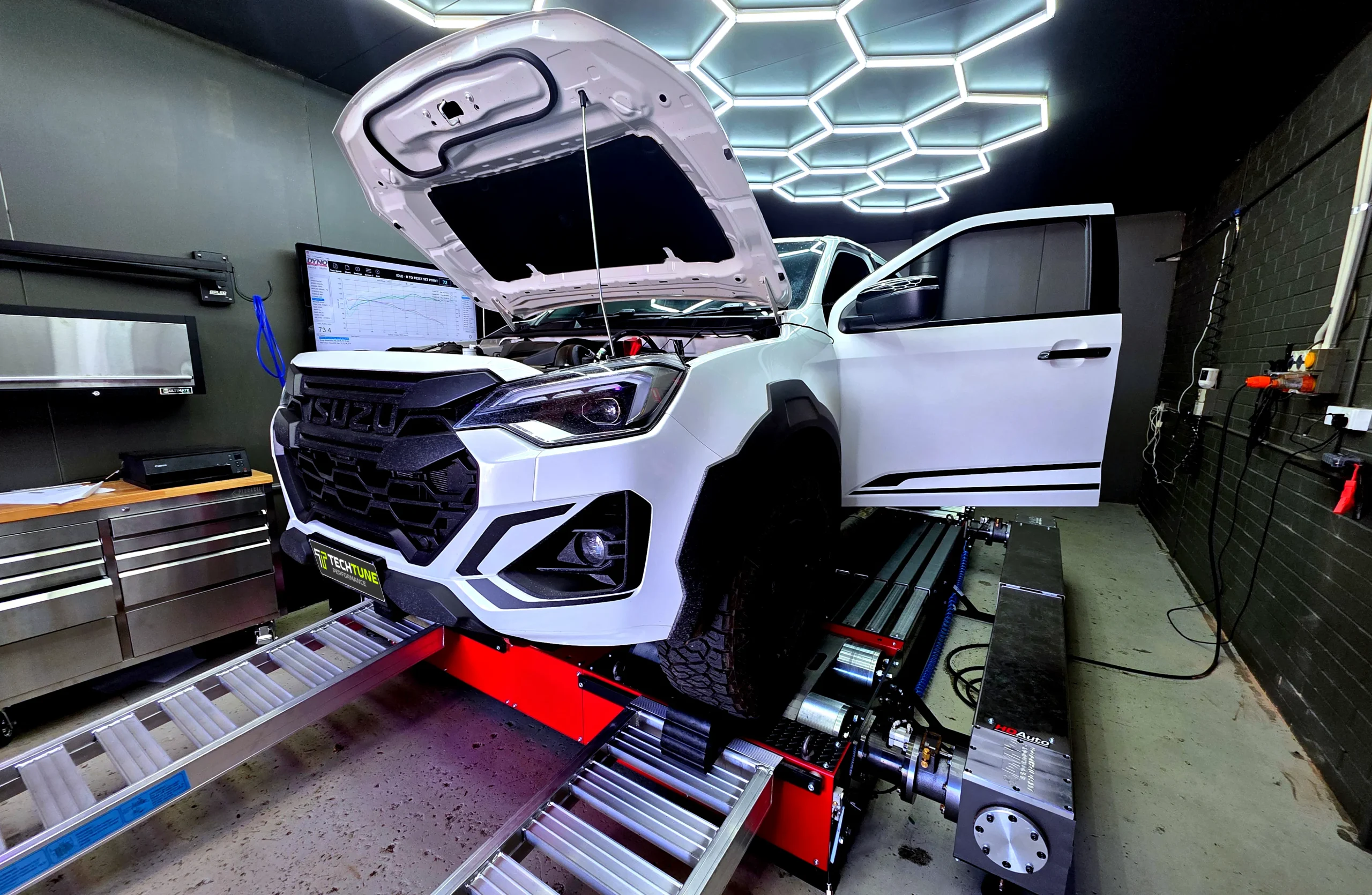
Quick answer: a custom ECU tune is a calibration written and refined for one specific vehicle, using data measured from that vehicle under controlled load. A generic tune file is a pre-built calibration chosen because the make, model and engine code match. Both change the ECU software, but only one is developed and checked against how your vehicle actually behaves.
Plenty of tunes are sold as “custom”. Some are. Others are a supplier file flashed in the carpark or on the workshop floor, with the word custom added to the invoice. From the driver’s seat they can feel similar for the first few days, which is why it pays to understand what separates the two before you book.
At TechTune Performance in Malaga WA, every calibration starts with the vehicle in front of us: its hardware, fuel, condition and how it will be used. This guide explains what makes a custom ECU tune genuinely custom, how it compares with an off-the-shelf tune file, and the questions that help you tell the difference.
- Custom means measured: the calibration is adjusted from your vehicle’s own dyno and ECU data, not from a file that suited a different car.
- Generic files are a starting point: they are not automatically unsafe, but they assume your hardware and condition match the vehicle they were built on.
- Stage numbers are labels: Stage 1 and Stage 2 are not technical standards and differ between suppliers.
- Evidence matters: a proper custom tune should come with baseline and final dyno results and an explanation of what was changed.
What Is a Custom ECU Tune?
The engine control unit (ECU) uses calibration tables to decide how much boost, fuel, timing and torque the engine is allowed to deliver in each operating condition. A tune changes those tables. ECU remapping is the process of rewriting them; whether the result is custom depends on how the new values were chosen and checked.
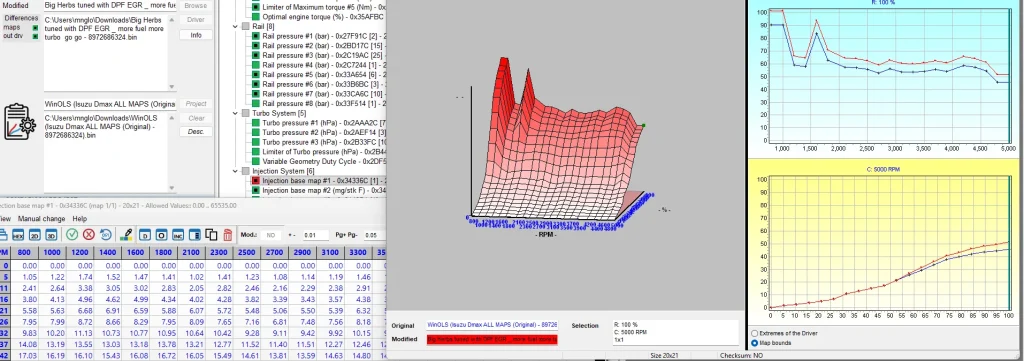
A custom ECU tune, sometimes called a bespoke or tailored calibration, is developed around one vehicle. The tuner records the hardware fitted, measures how the engine responds under load, reviews logged data, makes changes and then verifies those changes with further runs. The finished calibration reflects that vehicle’s measured behaviour rather than an assumption.
1. Custom ECU Tune vs Generic Tune File: What’s the Difference?
A generic or off-the-shelf tune file is developed once, usually on a test vehicle, and then sold or reused for other vehicles with the same engine. A custom calibration may begin from a similar base, but it is refined using the individual vehicle’s results. The table below summarises the practical differences.
| Factor | Generic / off-the-shelf tune file | Custom, dyno-validated ECU tune |
|---|---|---|
| How it is built | Developed once on a test vehicle and reused | Developed and refined on your vehicle |
| Hardware considered | Assumes a typical configuration for the stage | Records the intake, exhaust, turbo, injectors and other parts fitted |
| Testing | Often a short road drive or none | Baseline and validation runs under controlled dyno load |
| ECU data logging | Limited or not reviewed | Requested vs actual values reviewed across the rev range |
| Transmission and torque management | May not be updated for the new output | Torque requests, intervention and shift behaviour checked |
| Evidence provided | Claimed gains for the engine type | Before-and-after dyno results for your vehicle |
| Best suited to | Standard, healthy vehicles with modest goals | Modified, towing, touring or performance vehicles |
For more on why one calibration rarely suits every engine, see our guide on why the same ECU map won’t suit every vehicle.
2. Why Two “Identical” Vehicles Can Need Different Calibrations
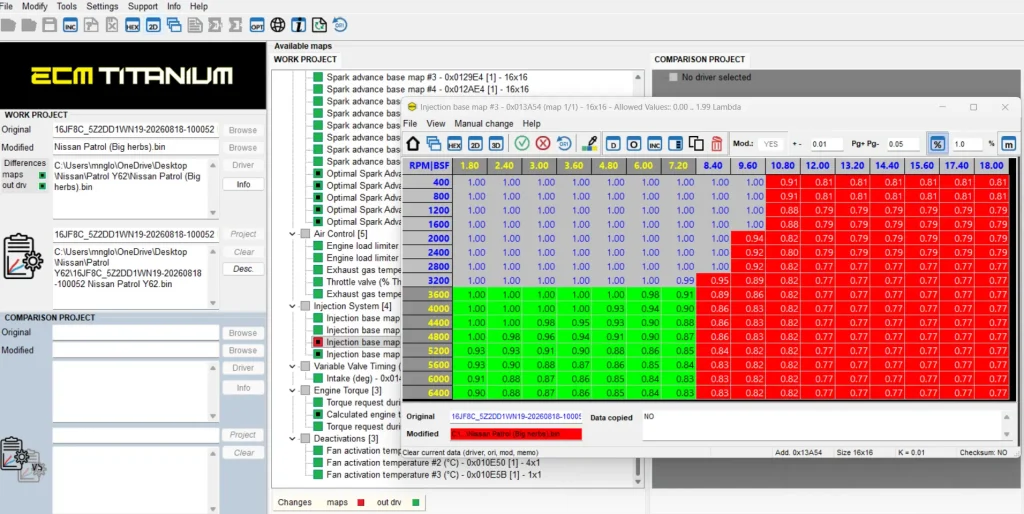
Two utes with the same badge and engine code can leave the factory with small differences in sensors, injectors and turbocharger behaviour. After a few years and tens of thousands of kilometres, those differences usually grow. Add aftermarket parts and the gap becomes significant.
- Hardware: intake, exhaust, intercooler, turbocharger, injectors and DPF/EGR condition all change airflow, boost and fuelling requirements.
- Mechanical condition: worn or unbalanced injectors, boost leaks or a tired turbo can make a file behave very differently from the vehicle it was built on.
- Fuel quality: petrol octane and diesel quality affect how much timing and fuelling the engine can safely use.
- Operating conditions: Perth summer heat raises intake and exhaust temperatures, so a calibration should be checked under sustained load, not only on a cool morning drive.

3. How Your Driving and Towing Use Shapes a Custom Calibration
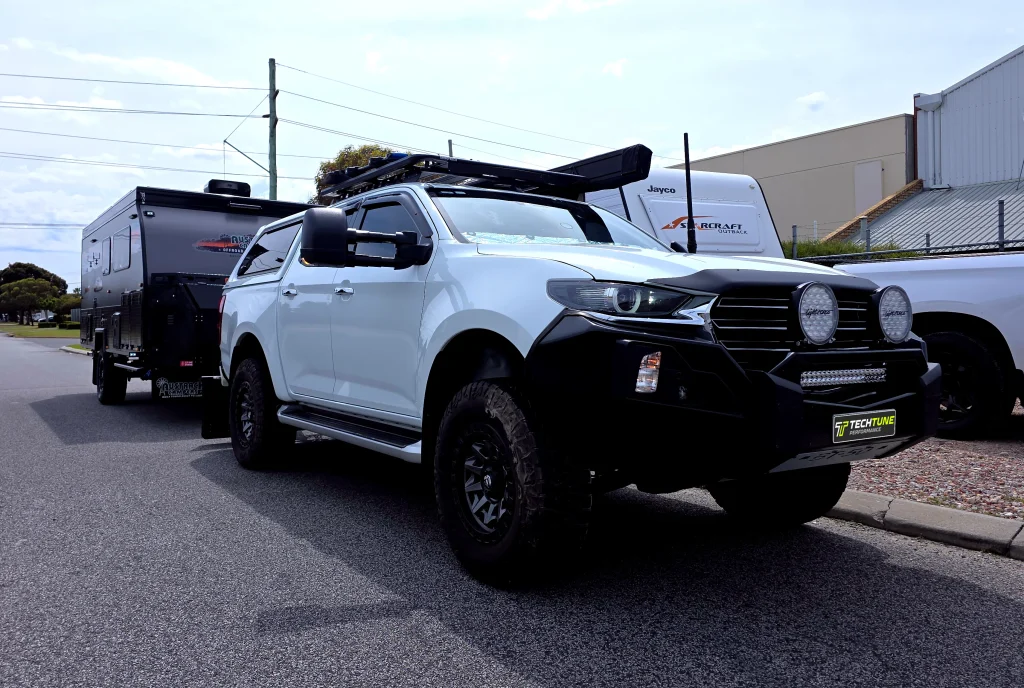
A custom calibration is not only about the engine. It should reflect how the vehicle is used. A daily driver, a touring 4WD carrying a full load and a vehicle towing a caravan through the Wheatbelt in summer place very different demands on boost, fuelling, exhaust temperature and the transmission.
That is why tune options such as TTP Tunes are built around low-RPM torque, towing stability or performance, and then adjusted to the individual vehicle. Telling your tuner how you actually drive is one of the most useful things you can do before the first run.
4. Does a Stage 1 or Stage 2 Label Mean the Tune Is Custom?
No. Stage 1 usually describes a tune for a largely standard vehicle and Stage 2 a tune for a vehicle with supporting modifications, but there is no universal definition. One supplier’s Stage 1 can be considerably more aggressive than another’s, and either can be a generic file.
Rather than relying on the stage number, ask what was changed, what was measured and how the result was validated. We cover the risks of untested reflashes in more detail in why carpark tuning needs proper dyno testing.
5. How a Custom ECU Tune Is Built: Step by Step
The exact process varies by vehicle and ECU, but a properly developed custom calibration generally follows these steps:
- Consultation and hardware record: confirm the modifications fitted, fuel used, current condition and how the vehicle will be driven or loaded.
- Health check: a pre-tune diagnostic check looks for fault codes, boost leaks, injector issues or other problems that a tune should not hide.
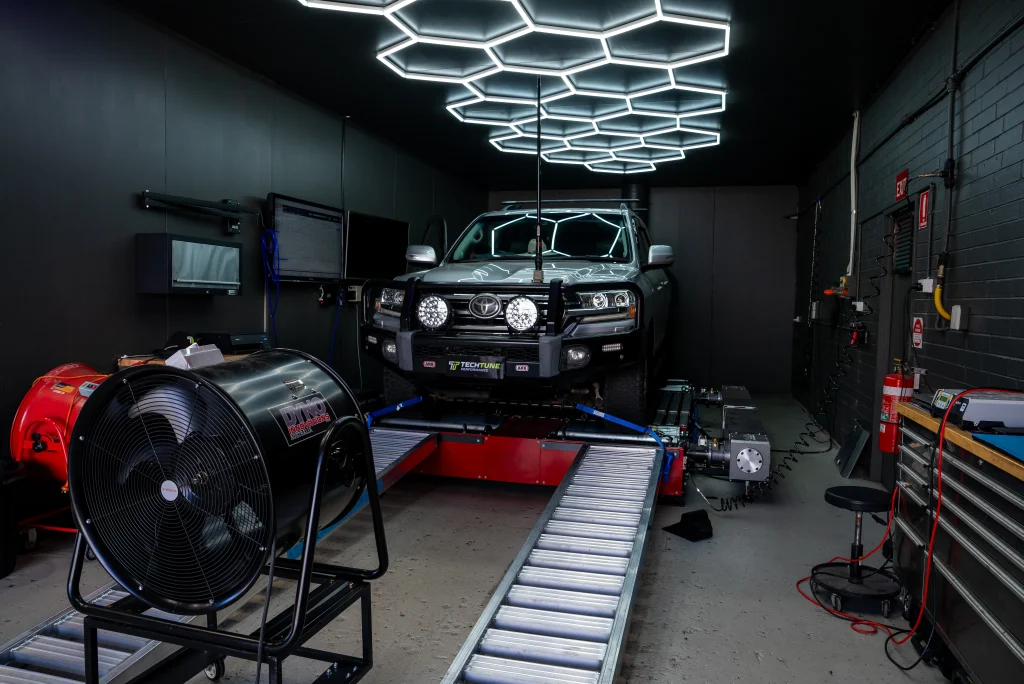
- Baseline dyno run: the vehicle is tested under controlled load to record standard power, torque and logged ECU behaviour.
- Calibration changes: boost, fuelling, timing, torque limits and related tables are adjusted for that vehicle’s hardware and goals.
- Validation runs: repeat runs check that actual values follow their targets and that temperatures stay controlled under sustained load.
- Transmission and torque check: torque requests, interventions and shift behaviour are reviewed so the engine and gearbox work together.
- Road test and handover: drivability is confirmed on the road and results are explained to the owner.
6. What Data Should Back Up a Custom ECU Tune?
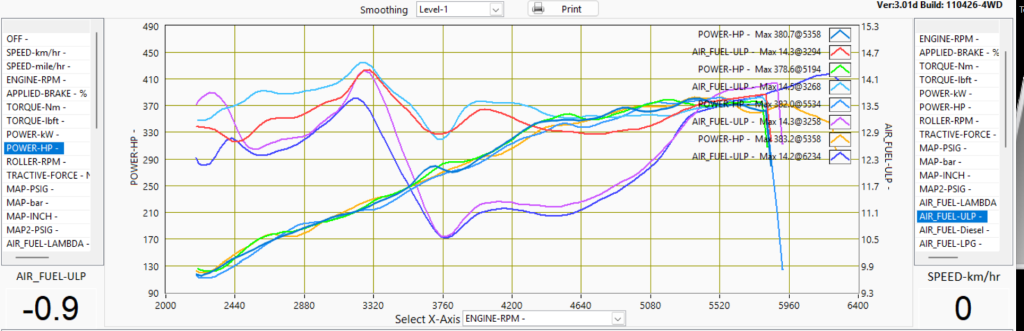
A power figure on its own says little about how a calibration is behaving. What matters is comparing what the ECU requested with what the engine actually delivered, across the rev range and under load. ECU data logging alongside dyno measurement makes that comparison possible.
- Boost target vs actual: shows whether boost control is stable or overshooting.
- Fuel rail pressure target vs actual: shows whether the fuel system keeps up as demand rises.
- Lambda / AFR: confirms fuelling is appropriate under load.
- Timing and torque intervention: reveals whether the ECU is pulling torque or timing back.
- Temperatures and knock (where supported): show how the engine copes with heat and sustained demand.
Available channels vary by vehicle and ECU. Our dyno testing guide includes a fuller list of logged channels and what each one can reveal.
7. Why Transmission and Torque Management Belong in a Custom Tune
Modern automatic and dual-clutch transmissions rely on torque information from the engine ECU to manage shift timing, clutch pressure and protection strategies. If engine output rises but the torque model is not updated to suit, the transmission can receive information that no longer matches reality.
The result can be harsh or flared shifts, repeated torque reduction or inconsistent behaviour under load. A custom ECU tune should consider the complete driveline, which is particularly important for AWD and 4WD dyno testing where all wheels are driven.
8. Signs Your “Custom” Tune Might Be a Generic File
None of these signs proves a problem on its own, but several together suggest the calibration may not have been developed around your vehicle:
- No dyno time, or only a quick road drive before handover.
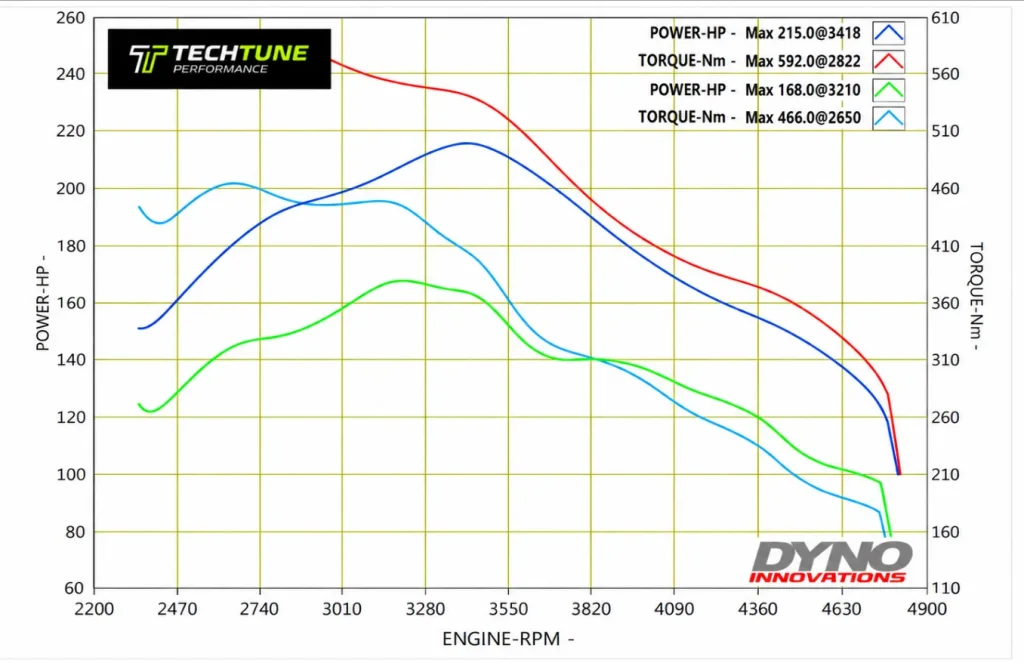
- No baseline result to compare against the final figures.
- Identical claimed gains for every vehicle with the same engine.
- The tuner cannot explain which tables were changed or why.
- No before-and-after dyno sheet or logged data provided.
- New symptoms after the tune, such as surging, limp mode, harsh shifts or unusually high exhaust temperatures.
9. Questions to Ask Before You Book a Custom ECU Tune
- Is the calibration developed for my vehicle, or is it a supplied file?
- Will the vehicle be tested on a dyno under controlled load, and will I receive the results?
- Which ECU channels will be logged during testing?
- How are boost, fuelling, timing and torque intervention checked?
- Is the transmission behaviour reviewed as part of the tune?
- What happens if the data shows a mechanical problem?
A reputable tuner should be comfortable answering each of these clearly.
10. Compliance, Insurance and Warranty Considerations
The Australian Government’s VSB 14 National Code of Practice sets out technical requirements for modifying light vehicles, while each state manages its own approval process. In Western Australia, check the Department of Transport WA modification requirements before making performance changes.
It is also sensible to tell your insurer about performance modifications, and to understand how a tune may affect any remaining manufacturer warranty. A good tuner will discuss these points openly rather than avoid them.
Conclusion
A custom ECU tune is defined by process, not by the label on the invoice. It starts with the individual vehicle, uses controlled load and ECU data logging to understand how that vehicle behaves, and only then adjusts the calibration and checks the result.
A generic tune file can be a reasonable starting point, but without measurement it relies on the assumption that your vehicle matches the one it was built on. With modifications, age, fuel and Western Australian conditions in the mix, that assumption is often where problems start.
If you want a calibration backed by evidence, talk to the team about dyno tuning in Perth or book a custom tune consultation and bring along your vehicle’s modification list.
Frequently Asked Questions
What is a custom ECU tune?
A custom ECU tune is an engine calibration developed for one specific vehicle. The tuner measures the vehicle under controlled load, reviews logged ECU data, adjusts boost, fuelling, timing and torque tables, and then verifies the changes rather than flashing a pre-built file.
Is a custom ECU tune better than an off-the-shelf tune file?
A custom tune is matched to your vehicle’s hardware, condition and use, so it can be checked for problems a generic file may miss. An off-the-shelf file can work well on a standard, healthy vehicle, but it has not been validated on yours.
Can a generic tune file be turned into a custom tune?
Yes. Many custom calibrations begin from a base file. It becomes custom when it is tested on the individual vehicle and refined using dyno results and ECU data logging until it behaves as intended.
How long does a custom ECU tune take?
It usually takes longer than a quick reflash because it includes a health check, baseline run, calibration changes and validation runs. Timing depends on the vehicle, ECU and modifications, so ask your tuner for an estimate when booking.
Will a custom ECU tune affect my automatic transmission?
It can. Automatic and dual-clutch transmissions use engine torque information to manage shifts. A custom tune should review torque requests, interventions and shift behaviour so the engine and transmission work together after the change.
Do I need to tell my insurer about a custom ECU tune?
Insurers generally expect performance modifications to be disclosed. Check your policy and speak with your insurer, and review the VSB 14 guidance and Department of Transport WA requirements before modifying your vehicle.
Ready For A Properly Tested Tune?
Every calibration is developed around your vehicle using controlled dyno load, live data logging and map-level validation before handover.
