
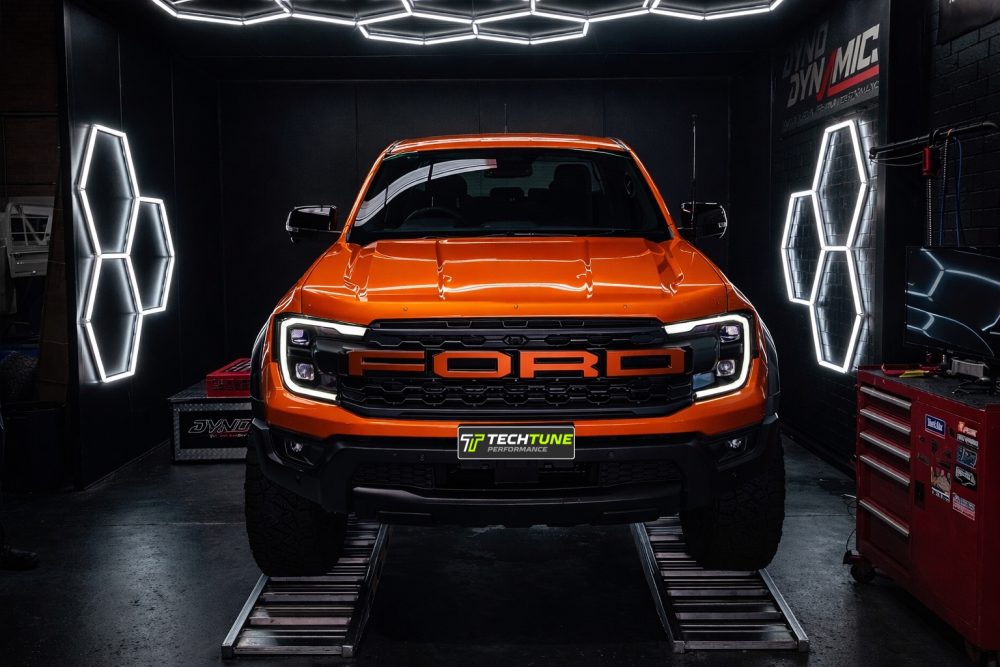
I remember when I first floored the new Gen Raptor’s pedal – it already felt like a rocket. In the Aussie-spec twin-turbo V6, it cranks out about 392 horsepower (292 kW) and rockets to 100 km/h in just under 6 seconds.
That raw grunt is awesome, but I soon realized that with a few clever upgrades (and a bit of wrench time), this off-road beast could deliver even more punch. In this guide, I’ll walk you through performance mods for a Raptor, from ECU tunes to exhaust swaps.
Unlocking More Power: ECU Tuning & Custom Calibrations
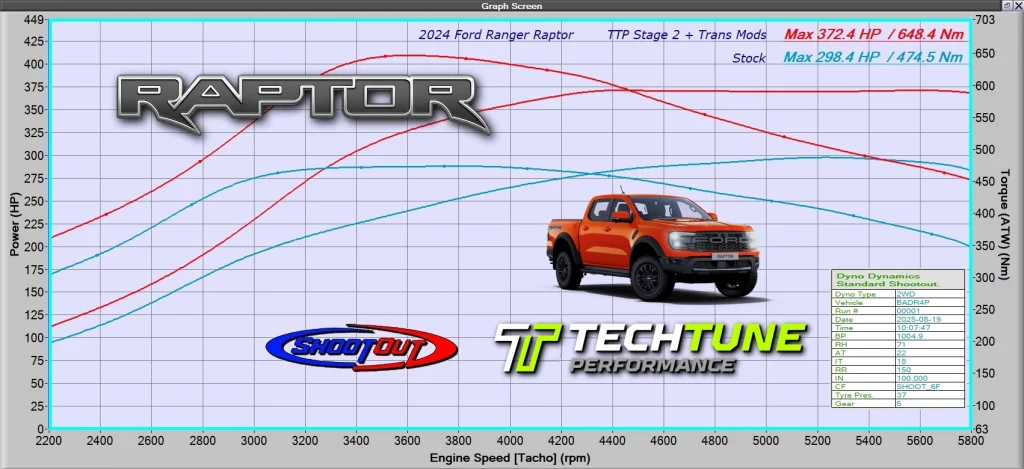
Think of the engine control unit (ECU) as your Raptor’s brain. An ECU tune – sometimes called a remap or chip tune – reprograms that brain to give your engine new instructions. In practice, a pro tune can massively boost low-end torque and make the throttle more responsive. In fact, local tuners in Perth and beyond report gains like +60 kW and +200 Nm on the 3.0L Raptor, pushing peak power up towards 500hp.
You read that right: flashing the stock ECU with a custom calibration can add roughly 80 horsepower and 200 Nm of torque at the flywheel, depending on fuel and setup. I’ve done dyno runs myself; after a safe Stage 1 tune, the truck felt so much more eager, with silky-smooth power delivery all across the rev range. The best part? It still feels like the same honest 10-speed automatic gearbox, only happier and smarter now.
ECU tuning usually comes in “stages” (Stage 1, 2, etc.), with Stage 1 being mostly software-only changes (no hardware mods needed). A quality Perth tuner will dial in boost pressure, fuel maps and shift points so everything works together safely. (For example, a Stage 4 pack might pair tuning with hardware like a bigger intercooler and exhaust, yielding nearly 39% more power.)
In short, I strongly recommend starting with a pro ECU reflash – it’s one of the best bang-for-buck upgrades. The truck’s throttle response sharpens up, and towing performance (if you’re into towing) improves too, because the calibration knows how to get torque out of a heavy load. It’s the quickest way to feel that extra grunt without changing any parts.
Intake & Exhaust Mods: Let It Breathe & Roar
After tuning the ECU, the next step is helping the engine breathe better. A high-flow air filter or a complete cold air intake can make a difference. For example, swapping in a 6-inch K&N-style pod filter (as sold for these Raptors) increases airflow so the engine isn’t starved for air.
I’ve noticed that even replacing the factory panel filter with a quality performance filter yields a bit more growl and a few extra horsepower without any fuss (and you just clean the filter instead of buying a new one every oil change).
Likewise, upgrading the crossover pipes (the tubes feeding both turbo intakes) to a larger diameter alloy kit can smooth airflow and eliminate any plasticky constrictions.
On the flip side, a freer-flowing exhaust lets spent gases exit faster. Many owners fit a 3-inch cat-back exhaust system: stainless steel pipes with high-flow catalytic converters. This not only adds a badass, turbocharged roar, but also virtually frees up horsepower.
In practice, a dual 3″ cat-back exhaust (like the kind used in Stage-4 packages) works with the factory bi-modal valves to improve flow without droning too much.
I’ll never forget the first time I heard my Raptor rip down the road with an aftermarket exhaust – it was bold and throaty without being illegal-sounding (still compliant with rules, mind you).
In fact, even Ford sells a performance exhaust kit that’s dyno-tested, pushing peak power over 450hp. Remember, though: any exhaust mod must respect Aussie regulations on noise, so go for a kit that’s road-legal.

Chill Factor: Intercooler & Cooling Upgrades
For a twin-turbo diesel (or petrol) like the Raptor’s, keeping charge air cool is huge. Upgrading to a larger intercooler is like giving your engine a faster air conditioner: it drops intake temps for denser air and more consistent power. Perth tuners commonly fit a big Process West Stage-2 intercooler with full-piping. The result? We’re talking around +20 kW (27 hp) net gain just from the intercooler upgrade alone.
Plus, the engine breathes steadily even after a few hard dyno pulls or a long hill climb – you avoid that “power fade” from heat soaking. In practice I’ve seen a tuned Raptor make the same power on multiple back-to-back runs once the big intercooler is installed, whereas stock it would start to fall off.
It’s also worth mentioning a heavy-duty radiator or oil cooler if you really push it. Some owners living in hot climates or towing often add auxiliary transmission coolers too. Perth summers can demand the truck tow a boat, so an upgraded trans cooler (like the Process West unit) keeps gears at happy temps under load. Bottom line: better cooling means safer, repeatable performance.
By now, my Raptor is churning out serious power, but it still needs traction to use it. That’s where tires and suspension enter. Upgrading from the stock rubber to sticky all-terrain tyres can halve your 0–60 time in low traction situations – it’s not extra engine power, but it feels like it because the ute actually hooks up instead of spinning. I run big 33″ all-terrain tires on mine, which firmed up the launch dramatically.
Underneath, consider beefier shock absorbers. The Raptor came with Fox shock absorbers from the factory, but some owners opt for even more adjustable coilovers or external reservoirs, especially for serious off-roading. It’s tempting, but I’ll say this: for most drivers, the stock off-road suspension is already top-notch.
Just make sure your shocks and bushes are in good shape – a worn suspension can sap performance too (on rough roads, the chassis will flex and waste energy). And don’t forget brakes: once you’re pulling down 500hp, high-performance pads and larger discs up front can keep your heavy beast in check. After all, having more power is great, but you want to stop safely too.
Legal & Safety: Mods and Aussie Regulations
Before you dive in and throw parts at it, remember: we’re in Oz. That means every mod must stay road-legal and safe. In Australia, your local Transport & Main Roads (TMR) authority actually classifies engine swaps, suspension lifts and similar changes as “complex modifications”. This means you’ll need an approved engineer to sign off if you add exotic parts or change the diff, for example.
Even simple swaps like taller tyres or “like-for-like” part replacements have rules. To put it bluntly, you can’t just crank up the boost and call it a day – The Queensland Department of Transport (for instance) explicitly says engine or suspension upgrades must meet national safety codes and usually need certification.
In my experience, the best approach is to talk to a qualified mod-shop up front. They’ll know the statewide standards (the Vehicle Standards Guide, ADRs, etc.) and can certify the install. If you ignore this, the risk isn’t just a ticket – an unapproved modification could void your insurance or leave you in trouble at a roadblock. So yes, do your homework: keep receipts, get the right badges, and enjoy your Raptor mods without surprises.

Maintaining Your Performance Beast
All these upgrades go hand-in-hand with diligent maintenance. A real Perth tradie wouldn’t let their work ute go without service, and the same goes for a tuned Raptor. After an ECU tune, I make sure to use quality diesel (I prefer 95 RON if fuel specs allow, because the extra octane helps keep the tune safe) and change the oil regularly.
I also keep an eye on the cambelt, water pump and turbo health – after all, if you’re asking the engine to make 500+ hp, you want its guts in top condition.
One tip I learned on a long haul down the Great Central Road is to occasionally revert to stock settings for a day or two. Running lean for a bit lets the carbon clean out (turbodiesels suffer from soot buildup with too much tuning).
Also, it’s wise to get an annual dyno and diagnostic check: it catches any sneaky issues like injector drift or a sticky EGR valve. When done right, the process of upgrading is as much about building knowledge as it is about building power.
Conclusion
The new-gen Raptor is already an amazing ute, but the reward of aftermarket tweaks is even more thrilling acceleration, torque and off-road prowess. By starting with a smart ECU tune and backing it up with intake, exhaust and cooling upgrades, you’ll feel this Raptor transform into a truly raptorial machine.
Just remember to keep mods street-legal and maintain your investment. Are you ready to unleash the roar? Go book that dyno session, or chat with a local 4×4 specialist – your Raptor’s next evolution is waiting.
Have questions or ready to start your Raptor upgrade? Reach out to your local performance shop for custom advice – then get out there and enjoy the drive!
Frequently Asked Questions
What does ECU tuning actually do for my Raptor?
ECU tuning recalibrates the engine’s computer to optimize power and torque across the rev range. It can lift, boost pressure, improve fuel and ignition timing, and adjust shift points. For the new Raptor, a tune alone can add tens of kW and hundreds of Nm, making throttle response sharper and pulling power stronger. In short, it’s one of the most effective mods for big gains.
How much horsepower can I expect to gain from a tune?
It varies by setup, but many Australians report about 60 kW (80 hp) gain and 200 Nm extra torque with a quality custom tune on the stock 3.0L Raptor. Some extreme Stage-3 or 4 packages with supporting mods (intercooler, exhaust, etc.) can push power near 500hp. Just remember to tune conservatively on older engines.
Will upgrading my Raptor’s power require more expensive fuel or maintenance?
Typically you should stick with high-quality premium diesel (97–98 RON where available) for the best knock resistance. After tuning, I personally run a top-tier fuel brand to protect the engine. Also, keep up with oil changes and service: higher boost strains components more, so fresh oil, clean filters, and healthy coolants are important. Some tuners suggest periodic “engine tune-ups” like swapping to stock settings to burn off soot, but with a good tune and maintenance, your Raptor should stay reliable.
Is it legal to modify my Raptor in Australia?
Yes – but with rules. Australia has strict vehicle standards (ADRs) and state laws. Basic mods (like filters or lifts) might not need paperwork if within guidelines, but major changes (engine swaps, big suspension lifts, changing engine internals) are “complex modifications” that need engineering approval. Always use approved parts and get any significant change certified by an authorized person. That way you stay safe and legal on Aussie roads.
What’s the typical cost and process for a performance upgrade?
Costs vary widely. A basic Stage-1 tune might run a few grand AUD, and simple bolt-on parts (air filter, exhaust, intercooler) can be a few hundred each. Full packages (Stage-3, -4) including labor and dyno can climb above $10k depending on components. The usual process: book a dyno baseline run, install mods one by one (each time checking gains), and finish with a final dyno+retune session. Many Perth shops offer upgrade packages and will guide you step by step.
Ready For A Properly Tested Tune?
Every calibration is developed around your vehicle using controlled dyno load, live data logging and map-level validation before handover.
