
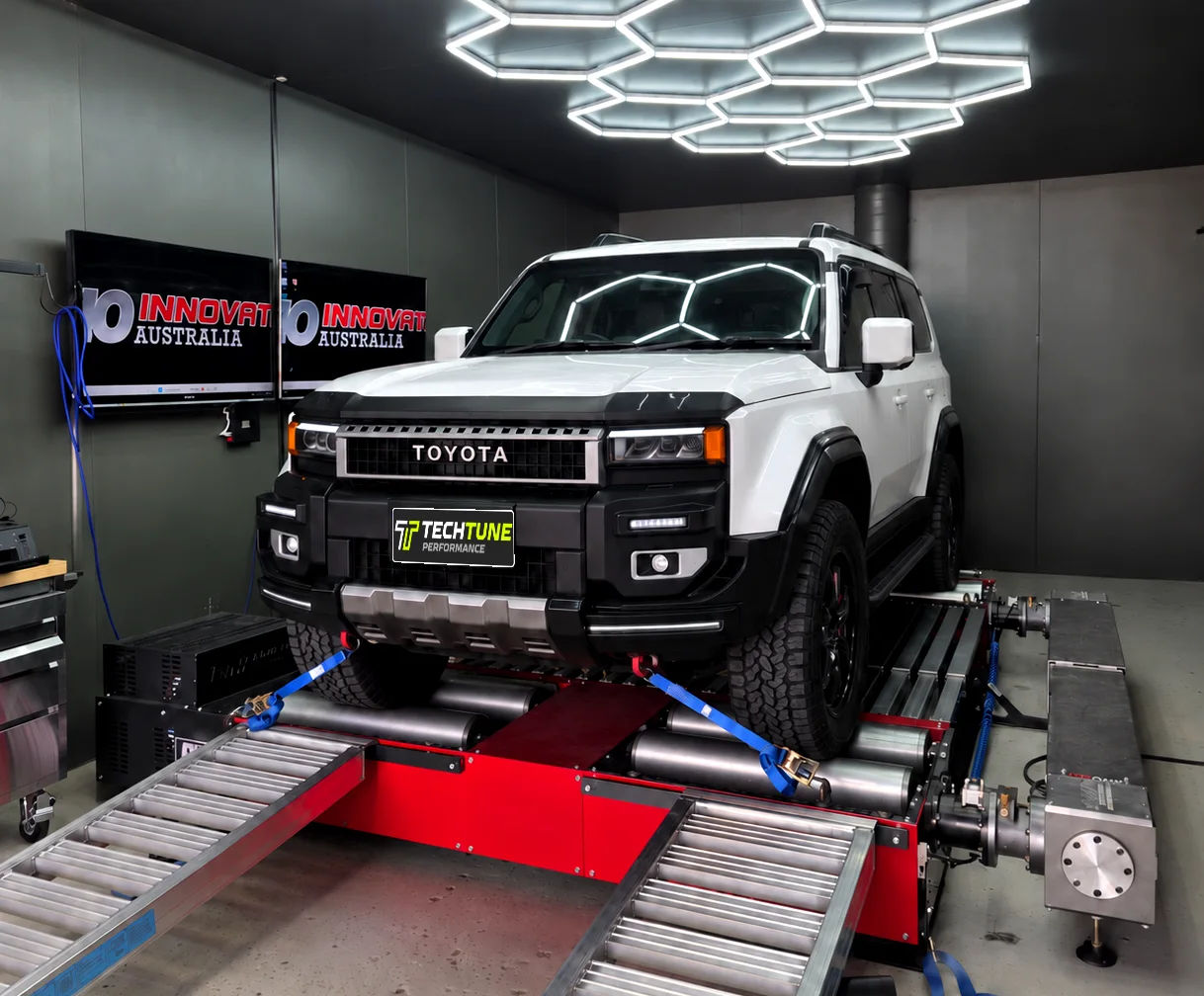
Choosing an AWD dyno tuner takes more than a power figure, because all-wheel-drive vehicles need proof that an engine calibration is working as intended. The way power is delivered through the drivetrain matters just as much as the engine’s output.
Proper AWD dyno tuning gives owners a way to assess performance under controlled load, with suitable equipment and data logging to examine how the vehicle responds. It is particularly important when tuning modern vehicles with electronic torque management, traction control and automatic transmissions.
1. Why Does an AWD Dyno Tuner Need Specialised Equipment?
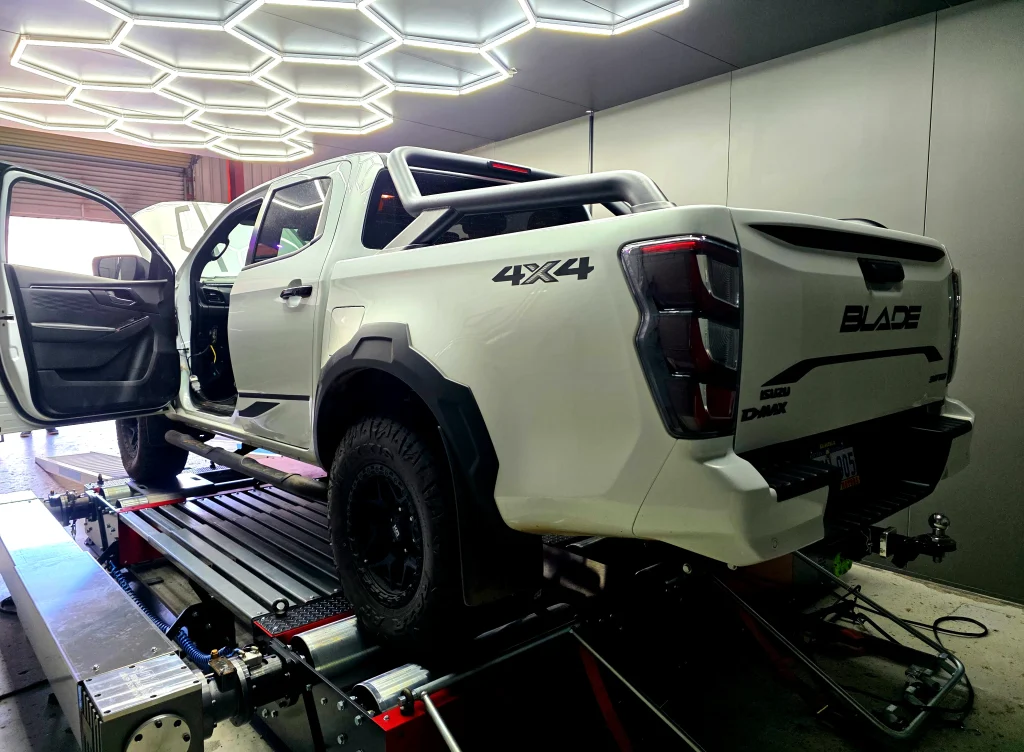
An all-wheel-drive vehicle sends power to both axles, although the way it distributes that power varies between vehicle designs. Some systems use mechanically linked drivetrains, while others rely on electronically controlled clutches or differentials to manage torque distribution.
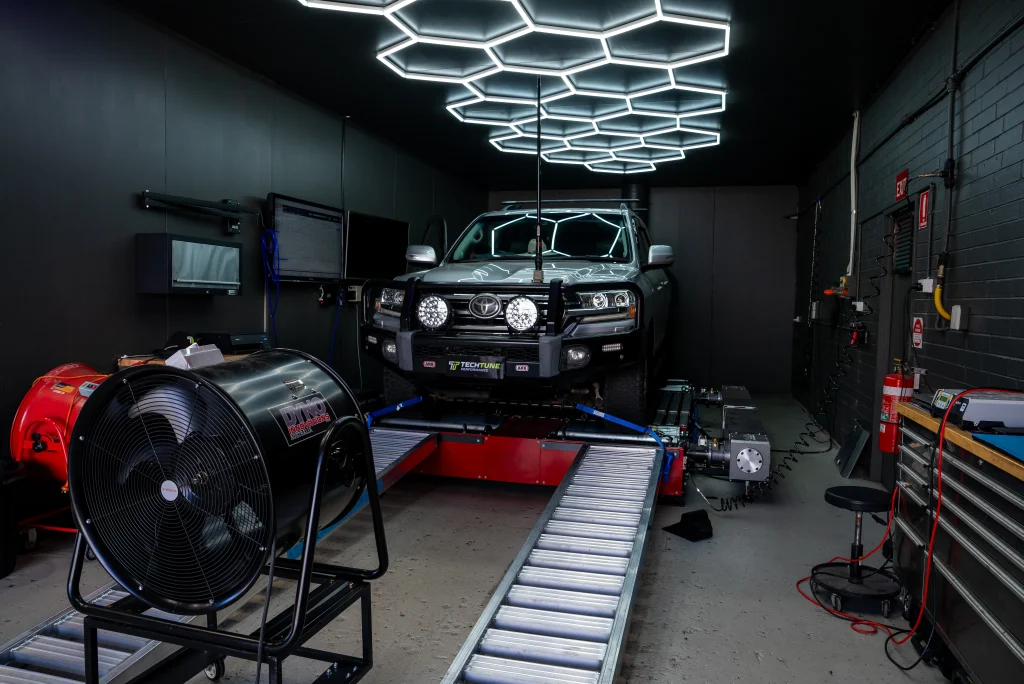
This makes dyno compatibility an important consideration. A dynamometer must suit the vehicle’s drivetrain and the manufacturer’s requirements. Front and rear roller speeds must remain appropriate for the system being tested, especially on vehicles with permanent AWD or a mechanically linked four-wheel-drive system.
A suitable AWD dynamometer can provide a controlled environment for repeatable testing. This allows the tuner to compare measured results before and after calibration changes without relying entirely on impressions from a road drive.
When choosing an AWD dyno tuner, owners should ask what type of dyno is used, how it accommodates their drivetrain and what information will be collected during testing.
2. How Does an AWD Dynamometer Work?
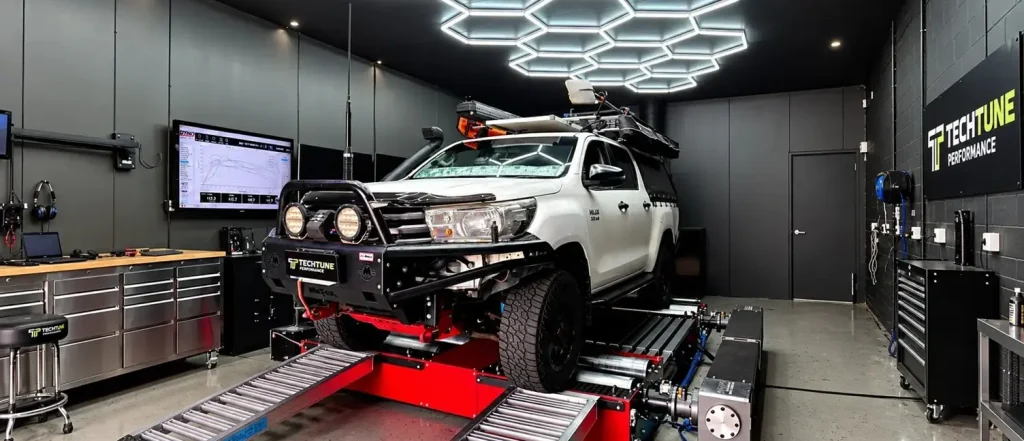
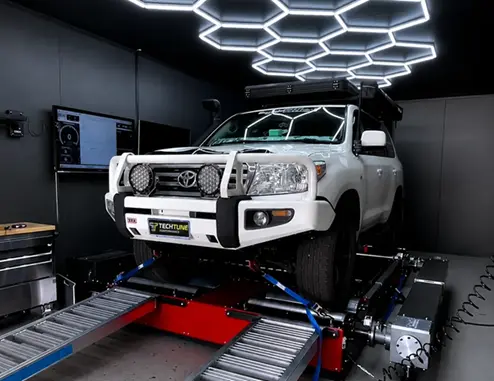
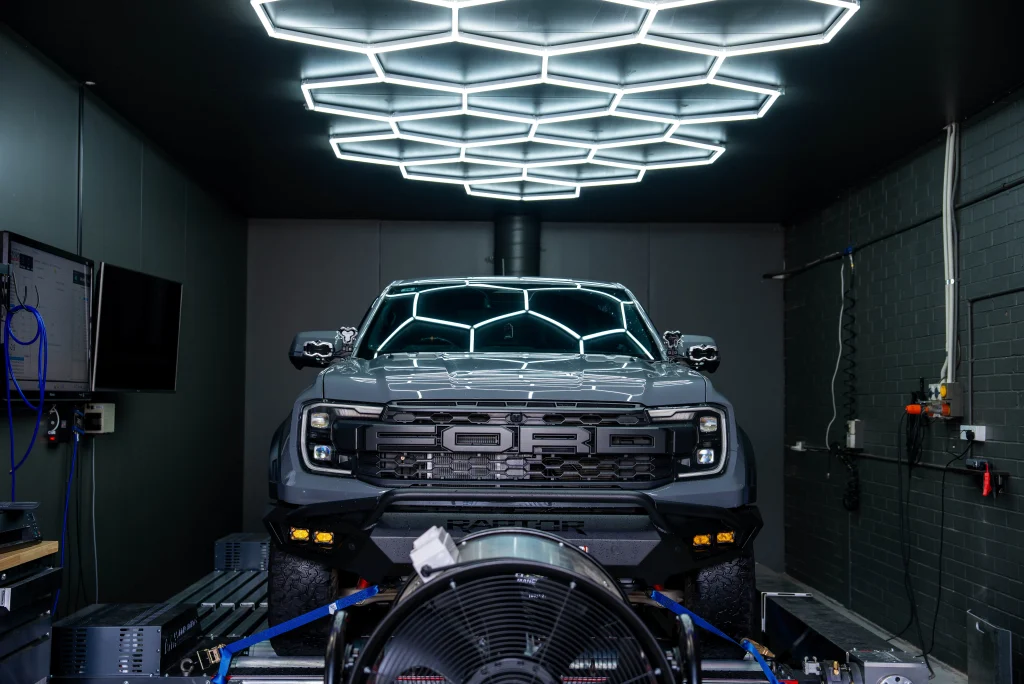
An AWD roller dynamometer measures a vehicle’s performance while its driven wheels operate on rollers. Depending on the equipment, the system can apply controlled load, record output and help reproduce operating conditions for calibration work.
A mechanically linked AWD dyno synchronises its front and rear roller beds. This arrangement helps maintain the required relationship between the axles during testing. It is particularly relevant to vehicles whose drivetrains are not designed to tolerate inappropriate front-to-rear speed differences.
Not every AWD vehicle uses the same drivetrain arrangement, so the correct setup must be confirmed before a test begins. A tuner should understand the vehicle’s operating requirements rather than assuming every all-wheel-drive system can be tested in the same way. Our earlier article on why proper testing matters for all-wheel-drive vehicles covers this in more detail.
A proper AWD dyno tune therefore starts with selecting compatible equipment and establishing safe, repeatable testing conditions.
3. Why Is a Road Reflash Different From Proper Dyno Tuning?
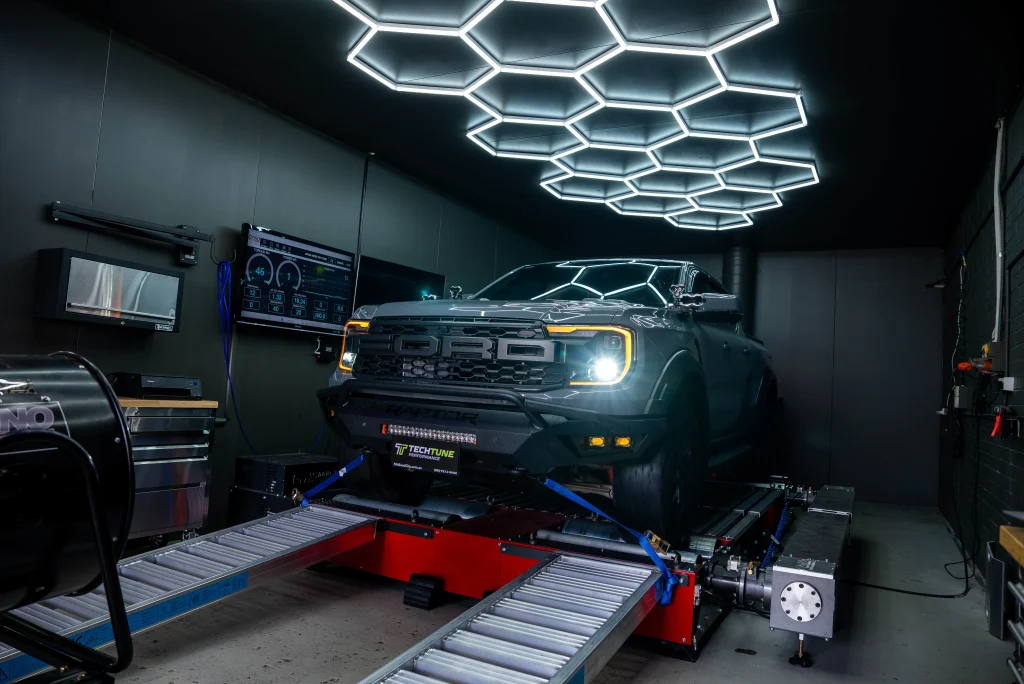
An ECU reflash changes calibration data stored in the vehicle’s engine control unit. Some services load a supplied file and carry out a short road test afterwards. That may show whether the vehicle feels more responsive, but it does not necessarily establish how the engine behaves under sustained load.
A quick drive can miss differences between requested and actual boost, fuel pressure deviations, torque intervention or rising temperatures. Public-road conditions also make it difficult to reproduce the same load consistently.
The phrase “no dyno needed” deserves careful consideration when a service claims to deliver a fully customised performance tune. A dyno is not the only possible diagnostic tool, and some limited calibration work may be appropriate without one. However, where the objective is to validate performance under controlled load, a suitable dynamometer provides valuable evidence that a short road test cannot offer on its own. We explain this further in why carpark tuning needs proper dyno testing.
When choosing an AWD dyno tuner, the important question is not how quickly the ECU can be programmed. It is whether the finished calibration has been tested and checked against the actual vehicle.
4. Generic Calibration Files Versus Custom AWD Tuning
A supplied calibration file is not automatically unsuitable. Files may be developed for a particular engine, vehicle platform or modification level, and can provide a starting point for calibration work. The concern arises when a file is assumed to be correct for every vehicle matching that description.
Two vehicles of the same model can have different hardware, mileage, maintenance histories and operating conditions. An upgraded turbocharger, modified intake, exhaust changes or variations in fuel quality can also affect how the engine responds. That is why the same ECU map won’t suit every vehicle.
Genuine custom AWD tuning uses information from the individual vehicle to guide calibration changes. The tuner can assess its configuration, establish a baseline, review available data and make adjustments based on measured behaviour.
Stage 1 and Stage 2 labels do not resolve this distinction. These terms are not universal technical specifications, and the same label can represent different changes from one provider to another.
When evaluating an AWD dyno tuner, ask whether the calibration is simply supplied and installed or whether it is refined and validated using measurements from your vehicle. A stage label or a claimed power increase cannot answer that question by itself.
5. What Should Be Measured and Logged During Testing?
A useful tuning session combines dynamometer measurements with relevant ECU or CAN data logging. These are complementary sources of information, but they are not interchangeable.
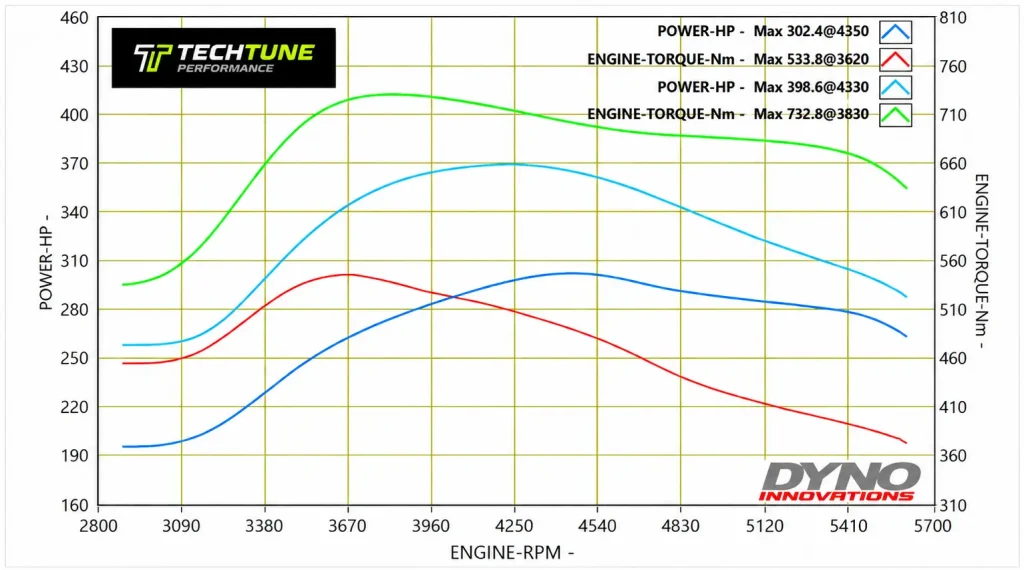
The dynamometer measures outputs such as power and torque. ECU logging records available engine and drivetrain parameters, which can help explain how those outputs are being produced.
| Measurement or logged channel | What it helps assess |
|---|---|
| Dyno power | Measured output across the test run |
| Dyno torque | Where torque rises, peaks or falls |
| Engine RPM | Reference for comparing results against engine speed |
| Boost/MAP actual | Pressure the engine is producing |
| Boost target | Requested pressure for comparison with actual boost |
| Lambda/AFR | Air-fuel mixture behaviour on applicable engines |
| Rail pressure actual | Fuel pressure delivered by the system |
| Rail pressure target | Requested fuel pressure |
| Ignition or injection timing | Timing behaviour as load changes |
| Throttle and torque intervention | Throttle closure or ECU torque reduction, where supported |
These channels should be selected according to the vehicle and the purpose of the test. Not every vehicle exposes every parameter, and sensor readings must be interpreted in the context of the relevant engine-management system.
For any AWD dyno session, reviewing measured outputs alongside logged parameters provides a more complete picture than relying on peak horsepower alone.
6. How Can Data Logging Reveal Hidden Problems?
Boost, fuelling and timing need to work together. Increasing boost without checking the fuel system, combustion behaviour and torque-control strategy does not automatically produce a suitable calibration.
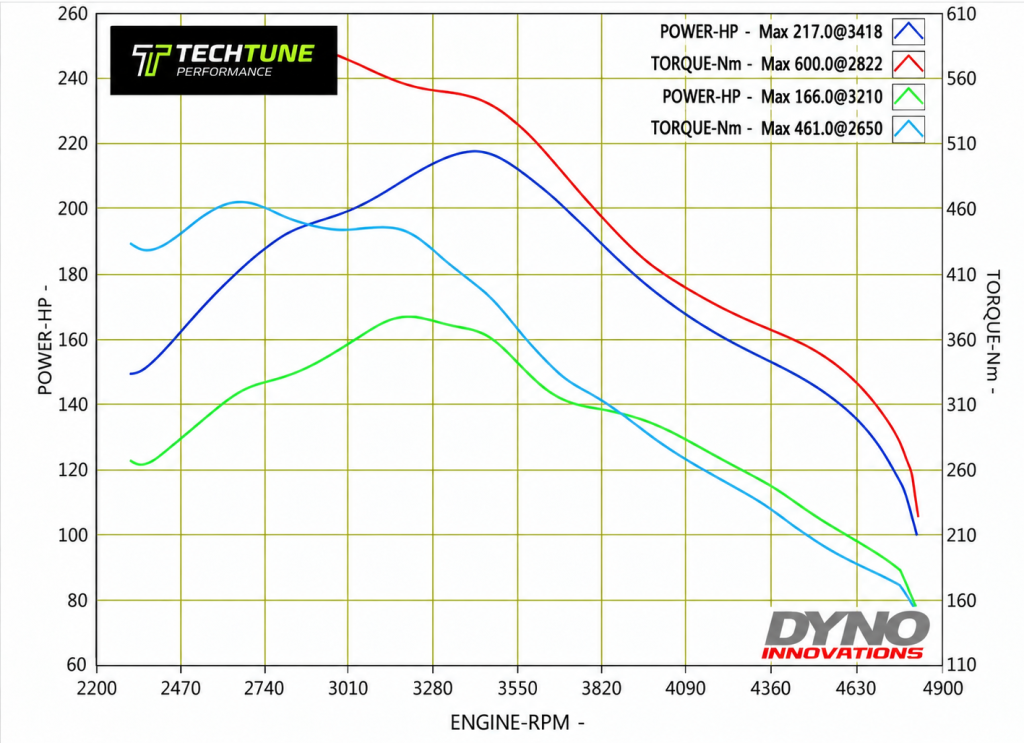
Comparing boost target with actual boost can reveal whether the turbocharger system follows the ECU’s request. A difference may require investigation, although the log alone cannot establish whether the cause is calibration, a mechanical fault or another control issue.
Fuel rail pressure actual versus target is useful on applicable common-rail diesel and direct-injection petrol systems. A pressure deviation under load may indicate that fuel delivery or pressure control needs further diagnosis. Lambda or AFR readings can provide additional information about fuelling on supported applications.
Ignition timing on petrol engines and injection timing on diesel engines must also be considered alongside load and other relevant parameters. On petrol applications, appropriate knock monitoring and, where suitable, knock-listening equipment can help identify abnormal combustion behaviour.
Torque intervention is another important area. An ECU may reduce requested engine torque through throttle control, boost, fuel quantity or other strategies. Logging the relevant signals can help explain why a vehicle does not deliver the response expected from the driver’s throttle input.
These checks make a proper AWD dyno tune a process of investigation and validation rather than simply chasing a larger number on a screen. Where logs point to a fault rather than a calibration issue, vehicle diagnostics may be the next step.
7. Why Heat and Transmission Behaviour Matter
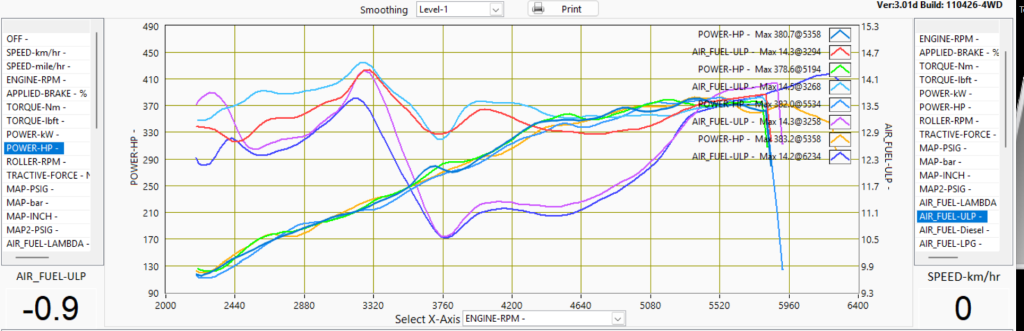
A vehicle may perform well during a short acceleration run but behave differently during repeated or sustained load. Depending on the platform, intake temperature, coolant temperature, oil temperature and exhaust gas temperature can help show how thermal conditions change throughout testing.
Excessive heat does not automatically mean a tune is responsible. Cooling system condition, hardware, ambient conditions and the way the vehicle is operated can all influence temperatures. However, abnormal readings deserve investigation before the calibration is considered complete.
The transmission also deserves attention. Modern automatic gearboxes may exchange information with the engine ECU to manage torque during shifts and protect components. Changes in engine torque can affect shift behaviour, clutch loading and the way the vehicle delivers power.
For this reason, an AWD dyno tune should account for relevant drivetrain and transmission behaviour, not just engine output. Suitable logging can help identify unusual torque reductions, inconsistent shifts or other behaviour requiring further assessment.
8. What Problems Can Proper Testing Help Identify?
Controlled testing and appropriate data logging can help uncover overboost, inconsistent fuelling, torque intervention, surging, abnormal temperature behaviour, limp-mode events and unusual transmission response.
The consequences depend on the fault and its severity. Some issues affect drivability, while persistent operation under unsuitable conditions may increase stress on the turbocharger, engine or transmission. More serious cases can result in component damage.
A dyno run does not automatically diagnose every mechanical fault, nor does a single graph prove that a vehicle is safe in every driving situation. Results need to be interpreted alongside vehicle condition, available sensor information and the manufacturer’s operating requirements.
Owners choosing an AWD dyno tuner should therefore look for a process that includes baseline assessment, appropriate calibration changes and final validation. The goal is to understand how the vehicle behaves, not merely to advertise a peak power figure.
9. What Should You Ask an AWD Dyno Tuner Before Booking?
Before booking, confirm that the facility has equipment suitable for your particular AWD system. Ask how front and rear roller speeds are managed and whether the vehicle’s drivetrain requirements have been considered.
It is also worth asking what will be measured, which ECU or CAN parameters can be logged and whether the tuner compares requested values with actual results. If the vehicle has modifications, explain what has changed and how it is used, including towing, touring or regular performance driving.
For road-registered vehicles, compliance is a separate consideration. Western Australian requirements depend on the type of modification and the circumstances involved. The official WA vehicle modification guidance explains that modifications must comply with applicable legislation, with some requiring inspection or approval.
A clear conversation before testing helps establish what the session can assess and what additional diagnosis might be needed.
Conclusion
Choosing an AWD dyno tuner should involve more than comparing advertised power figures or selecting a tune by its Stage 1 or Stage 2 label. The quality of the equipment, calibration process and final checks all matter.
When you shortlist an AWD dyno tuner in Perth, ask whether the dyno suits your vehicle’s drivetrain, which ECU channels can be logged and how the final calibration is retested. A good AWD dyno tuner will explain the limits of the testing as clearly as the benefits, and will not promise results before the vehicle has been assessed. If one AWD dyno tuner cannot answer those questions, keep looking.
A suitable AWD dynamometer, combined with relevant ECU data logging, can help the tuner compare measured power and torque with boost, fuelling, timing, torque intervention and temperature behaviour. This is particularly valuable when a supplied calibration file has not been validated on the individual vehicle.
Before making changes, ask about testing and confirm how your vehicle’s drivetrain will be accommodated. To discuss your vehicle and its requirements, contact TT Performance or review the dedicated AWD dyno tuning service page for further information.
Frequently Asked Questions
Why does an AWD vehicle need a compatible dynamometer?
AWD systems differ in how they distribute power and manage front-to-rear wheel speeds. The dynamometer must suit the vehicle’s drivetrain and operating requirements to support appropriate, repeatable testing.
Is a generic AWD calibration the same as a custom tune?
No. A supplied file may be developed for a particular vehicle specification, but a custom tune uses information from the individual vehicle to guide adjustments and validation.
What is the difference between dyno measurements and ECU logging?
Dyno measurements include power and torque, while ECU or CAN logging can record boost, fuel pressure, timing, throttle position and other available parameters. Together, they help explain how the vehicle performs under load.
Can AWD dyno testing identify engine or transmission problems?
It can help reveal abnormal behaviour when suitable measurements and logged channels are available. Further mechanical diagnosis may still be required to establish the cause.
Are Stage 1 and Stage 2 tunes reliable indicators of quality?
Not by themselves. Stage labels are not universal specifications. The calibration method, vehicle-specific measurements, testing conditions and final validation provide more useful information about the work performed.
Ready For A Properly Tested Tune?
Every calibration is developed around your vehicle using controlled dyno load, live data logging and map-level validation before handover.
