TechTune Fleet Calibrations
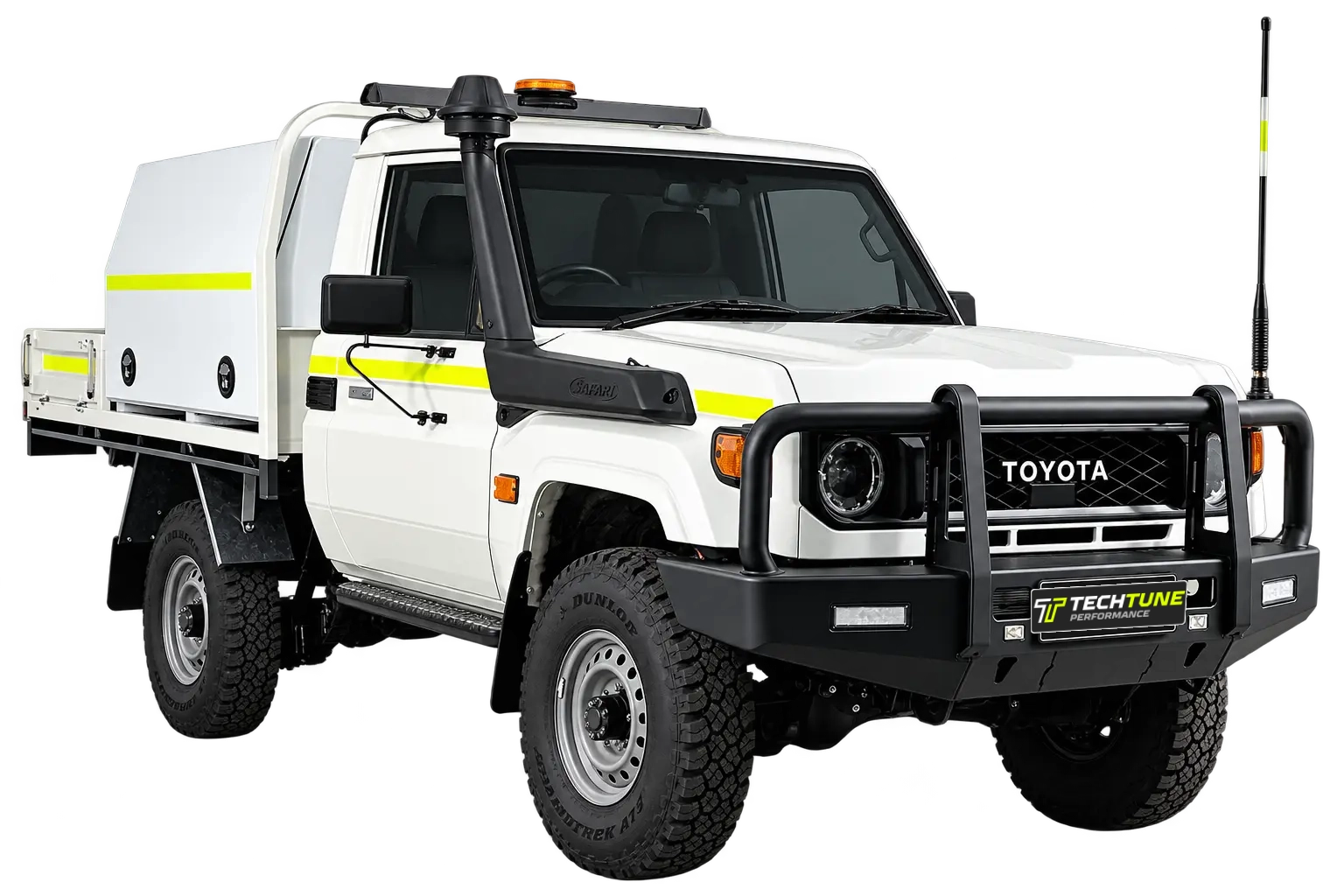
ECU and transmission calibration solutions for supported fleet, commercial, mining, agricultural and special-purpose vehicles. Developed around the way the vehicle is actually used — with focus on usable torque, drivability, efficiency, speed and RPM management, transmission behaviour and consistent fleet operation.
Search this page for a fleet requirement and jump directly to the relevant capability.
Fleet & Commercial
Calibration Built Around The Job The Vehicle Actually Does
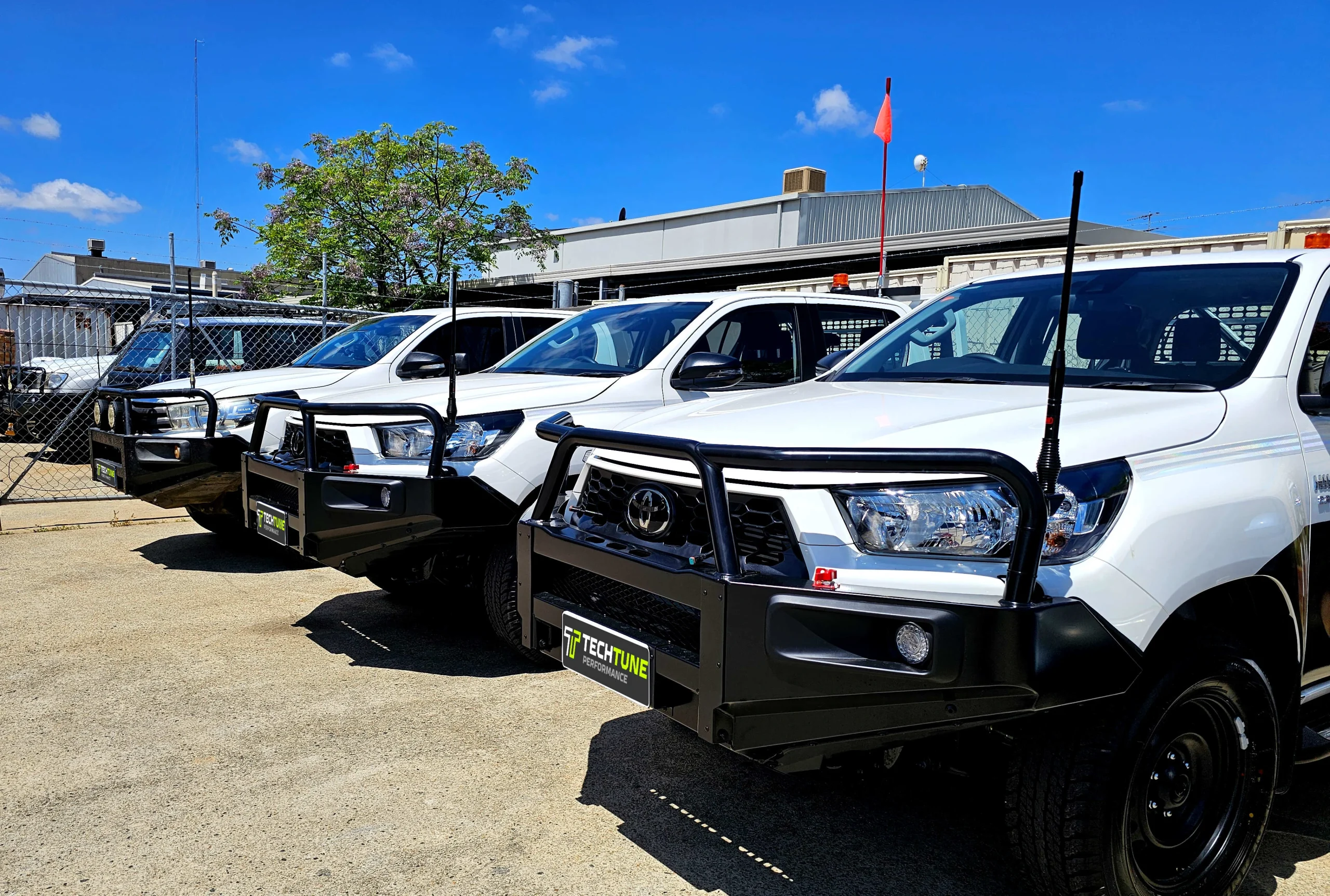
A work vehicle does not necessarily need the same calibration strategy as a private performance vehicle. Fleet vehicles can spend their lives towing, carrying constant payload, operating at restricted site speeds, idling for long periods or working in a narrow engine-speed range.
TechTune can develop supported ECU and transmission strategies around the operating requirement rather than simply chasing a maximum dyno number. Depending on platform and application, that can include torque delivery, driver demand, transmission behaviour, engine RPM control, vehicle-speed management and fuel-efficiency focused calibration.
For multi-vehicle fleets, the goal can also include standardising approved calibration behaviour across compatible assets with original software backups and clear identification of the calibration fitted to each vehicle.
Built For More Than Retail Vehicle Tuning
Fleet calibration can be applied across a range of supported vehicle platforms and operating environments. The exact strategies available depend on the ECU, TCU, vehicle configuration, operating requirement and applicable approvals.
Mining & Resources
Calibration for supported mine and resource-sector vehicles including site-oriented speed and RPM management, throttle strategy, loaded torque delivery and consistent calibration across compatible light-vehicle fleets.
Haulage & Logistics
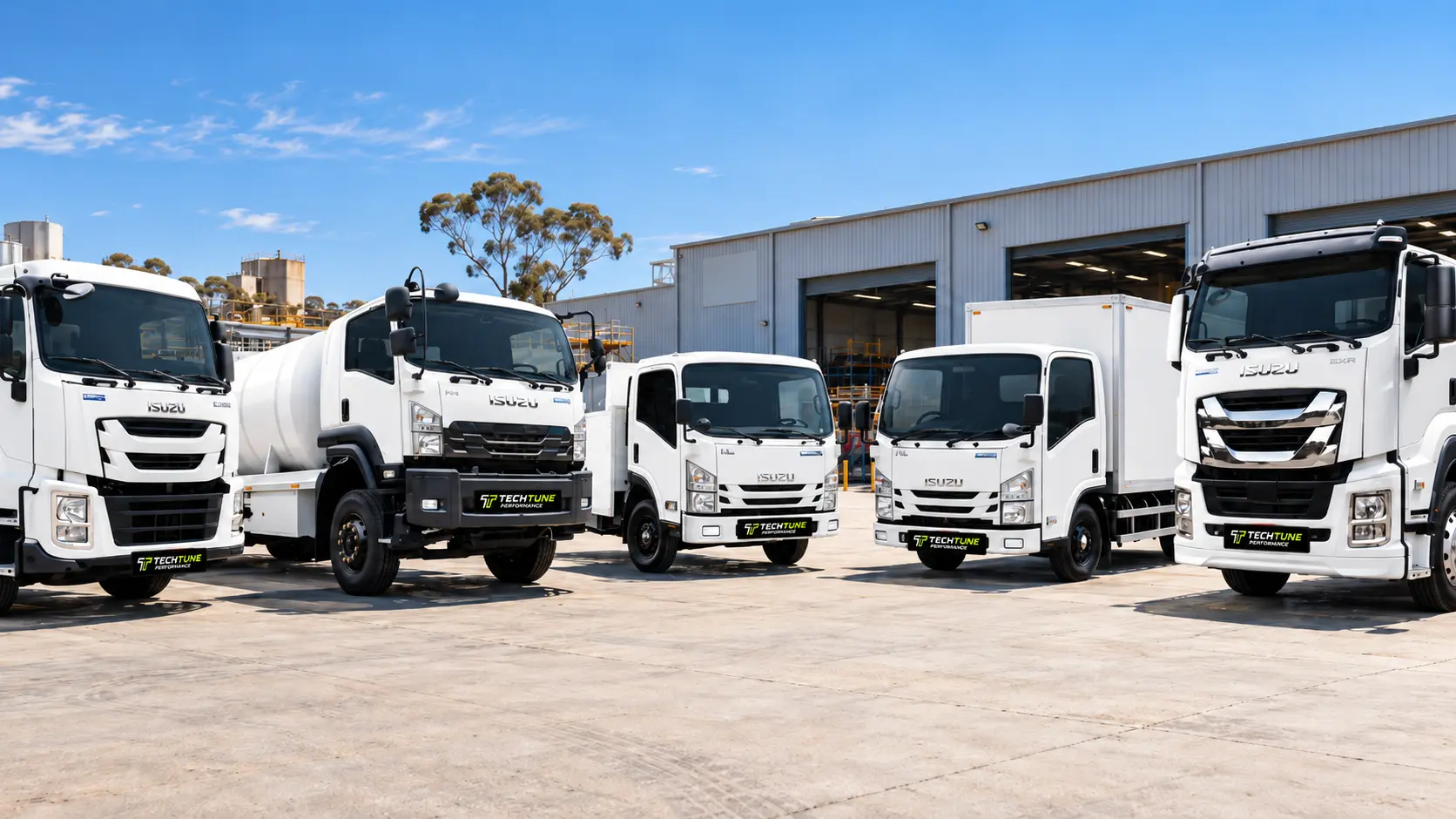
Engine and transmission calibration focused on loaded operation, usable low-RPM torque, shift behaviour, throttle response and efficiency for supported haulage and commercial platforms.
Agriculture & Off-Highway
Calibration focused on sustained-load torque, working RPM, throttle response, fuel use and vehicle or engine-speed management for supported agricultural and off-highway applications.
Commercial & Utility Fleets
Calibration for trade, field-service, utility and business fleets where drivability, consistent vehicle behaviour, loaded performance and operating cost matter more than headline power figures.
Emergency & Special-Purpose
Supported response and special-purpose vehicles can be assessed for application-specific engine, transmission, high-idle, throttle or torque strategies subject to platform capability and applicable requirements.
Fleet Standardisation
Compatible assets can be maintained against an approved calibration strategy with original software backups, calibration identification and consistent operating characteristics across the fleet.
Duty-Cycle Focused
Not Maximum Power. The Right Output For The Application.
Fleet calibration is about how the vehicle behaves during its normal working day. A vehicle that is constantly loaded, towing, restricted to site speeds or operating auxiliary equipment may benefit from a very different strategy to a lightly loaded road vehicle.
We can review how supported engine and transmission torque structures, throttle demand, shift logic, boost, fuelling and other available strategies interact under load, then calibrate around the actual requirement.
Where controlled dyno testing is appropriate, TechTune can establish a baseline, data log the vehicle under repeatable load and validate the finished calibration before wider fleet consideration.
Engine, Torque & Vehicle Management Strategies
The available functions vary by vehicle and controller. TechTune assesses each platform before confirming what can be configured or recalibrated.
Vehicle Speed Management
Software-based vehicle-speed strategies can be configured on supported platforms for site, fleet or operating requirements where legally and technically appropriate.
Engine RPM Management
Engine-speed limits, working-RPM strategies and supported high-idle functions can be reviewed where the ECU provides suitable control.
Torque Management
Requested torque, driver demand and restrictive torque strategies can be reviewed and recalibrated where appropriate while retaining required engine, transmission, thermal and drivetrain protections.
Fuel-Efficiency Calibration
Calibration can be developed around efficient torque delivery and the vehicle's normal operating range, with the aim of improving how the vehicle performs its workload rather than simply adding peak output.
Throttle & Driver Demand
Supported pedal and driver-demand strategies can be refined for smoother, more predictable response or more appropriate low-speed control depending on the operating environment.
Transmission Calibration
Where supported, shift behaviour, torque-management interaction and related transmission strategies can be developed alongside the engine calibration so the driveline operates as a complete system.
One Pilot Vehicle. Then Validate Before Rollout.
For larger fleets, the most practical starting point is usually a controlled pilot vehicle rather than modifying multiple assets immediately.
TechTune can review the operating requirement, establish a baseline on a suitable vehicle, develop the supported calibration strategy and validate the result before the customer considers a wider rollout.
That approach gives the fleet operator an opportunity to assess drivability, operating behaviour and any measurable fuel or productivity outcomes in real service before committing to additional vehicles.
Built For Repeatable Fleet Deployment
Once a calibration has been approved for a compatible vehicle configuration, it can form the basis of a controlled fleet package rather than treating every vehicle as an unrelated one-off tune.
Original ECU software, calibration identification and vehicle-specific records can be retained to make future servicing, updates and fleet additions easier to manage.

Scope. Pilot. Calibrate. Validate. Deploy.
The process can be scaled from a single commercial vehicle through to a compatible multi-vehicle fleet.
Operating Requirement
Understand the vehicle type, fleet size, payload, towing, site restrictions, typical speeds, operating hours and the result the business wants.
Select A Vehicle
Choose a representative compatible vehicle for initial assessment and calibration development.
Check & Log
Scan the vehicle, identify software and establish baseline behaviour before calibration changes are made.
Develop Strategy
Adjust the supported ECU and TCU strategies around the vehicle's actual working requirement.
Controlled Testing
Re-test and data log the finished vehicle so the result is based on measured behaviour rather than assumption.
Fleet Rollout
Subject to customer approval, apply the approved strategy to compatible fleet vehicles with calibration identification and records.
The Result Should Make Sense For The Business
A fleet calibration project should have a clear operating reason behind it — whether that is improved loaded drivability, more consistent vehicle behaviour, speed management, reduced gear hunting, better response, improved fuel use or standardised calibration across multiple assets.
Application-Specific. Not Blanket Protection Removal.
Fleet work needs to be approached differently to a quick performance reflash. Where torque, speed, RPM or other management strategies are reviewed, the objective is to configure the vehicle for the intended application without indiscriminately removing protections that are required for the engine, transmission, drivetrain or safe operation.
Road-registered, heavy, emergency and special-purpose vehicles may also be subject to regulatory, engineering, manufacturer, client or site requirements. Any proposed calibration needs to be assessed in that context.
Platform Capability Varies
Not every ECU or TCU exposes the same functions. TechTune confirms supported capabilities after reviewing the specific vehicle, controller and software version.
Contact us with the fleet make, model, year, engine, transmission, vehicle count and operating requirement so we can assess the project properly.
Fleet & Commercial FAQ
Can you apply the same calibration across a fleet?
Where vehicles share a compatible hardware and software configuration, an approved fleet strategy may be able to be deployed across multiple vehicles. Each vehicle still needs to be identified and checked before programming.
Can you configure speed or RPM limits?
On supported platforms, vehicle-speed and engine-RPM strategies may be configurable. The exact function depends on the controller and application, and any road, site or regulatory requirements still apply.
Can you remove factory torque restrictions?
We can review torque-management and driver-demand strategies on supported vehicles. The goal is not to remove every limitation indiscriminately; changes need to suit the engine, transmission, drivetrain, thermal limits and intended use.
Can fleet calibration be focused on fuel efficiency?
Yes. Where appropriate, calibration can be developed around the vehicle's normal operating range, torque demand and transmission behaviour with efficiency as one of the project objectives. Real-world results still depend heavily on payload, route, tyres, driving conditions and operator behaviour.
Do you work with businesses outside normal retail tuning?
Yes. Fleet enquiries can include mining and resource contractors, agriculture, haulage, utilities, service vehicles and other commercial operators with supported vehicle platforms.
Have A Fleet Requirement? Talk To TechTune.
Send us the vehicle make and model, fleet size, operating environment and what you want to achieve. We can review the platform and discuss whether a pilot calibration or fleet program is suitable.
