

Over the past few years, we’ve pulled ECU files from a number of vehicles that had previously received a “Stage 1” or “Stage 2” tune without dyno testing.
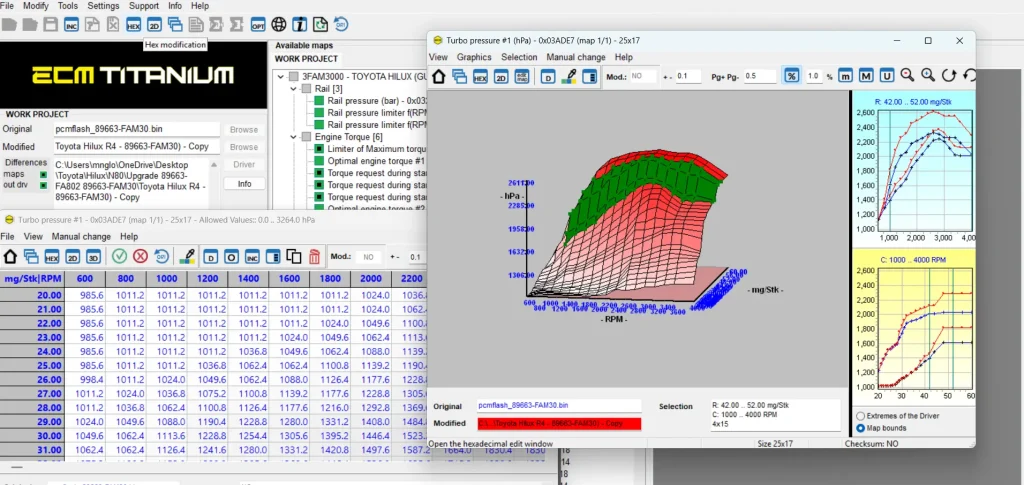
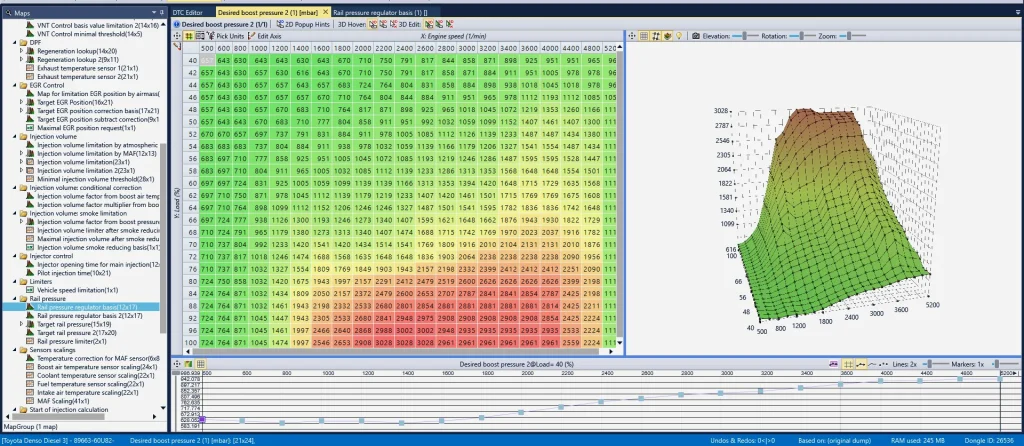
What we often noticed straight away were increases to fuelling, boost/load targets, injection timing and throttle response. What we didn’t always see were the correct torque modelling and torque management adjustments to support those changes.
On many modern vehicles, the ECU uses calculated torque as a major part of controlling engine output. If the torque model and associated limiters aren’t calibrated correctly, the ECU can still restrict requested load, fuel, boost or delivered torque—even though other areas of the calibration have been increased.
This is one reason some customers come to us saying their previous tune felt only slightly stronger, or that the expected improvement in power and torque simply wasn’t there.
Increasing individual maps is only part of the job. The calibration needs to work together as a complete strategy.
A vehicle can feel stronger after an ECU flash, but that does not always tell you what is happening under load. Carpark Tuning needs to be considered carefully when a vehicle is flashed without controlled dyno testing and detailed data logging.
A quick road drive may show better response or acceleration. However, Carpark Tuning should also involve questions about boost, fuelling, timing, torque control and temperature behaviour when the engine is placed under sustained load.
What Is Carpark Tuning?
Carpark tuning generally describes an ECU calibration or reflash carried out away from a dedicated dynamometer. The vehicle may be connected to diagnostic equipment, a calibration file loaded and a short road test completed afterwards.
The location itself is not necessarily the only concern. The more important question is whether the calibration has been properly measured and validated. A vehicle can feel better while still showing differences between commanded and actual boost, fuel pressure, torque or timing.
For anyone considering Carpark Tuning, asking how the vehicle will be tested can be more useful than simply asking what stage tune is being offered.
1. Carpark Tuning and the Limits of a Road Test
A road test has an important role because it shows how the vehicle behaves in normal driving conditions. It can reveal drivability problems, hesitation, smoke, surging or obvious faults.
The limitation is repeatability. Traffic, road gradient, weather, speed and available space can all change the test conditions. A short acceleration run may also finish before a problem appears.
This is one reason Carpark Tuning should not be judged only by whether the vehicle feels faster after the flash. Driver feedback matters, but it is only one part of understanding a calibration.
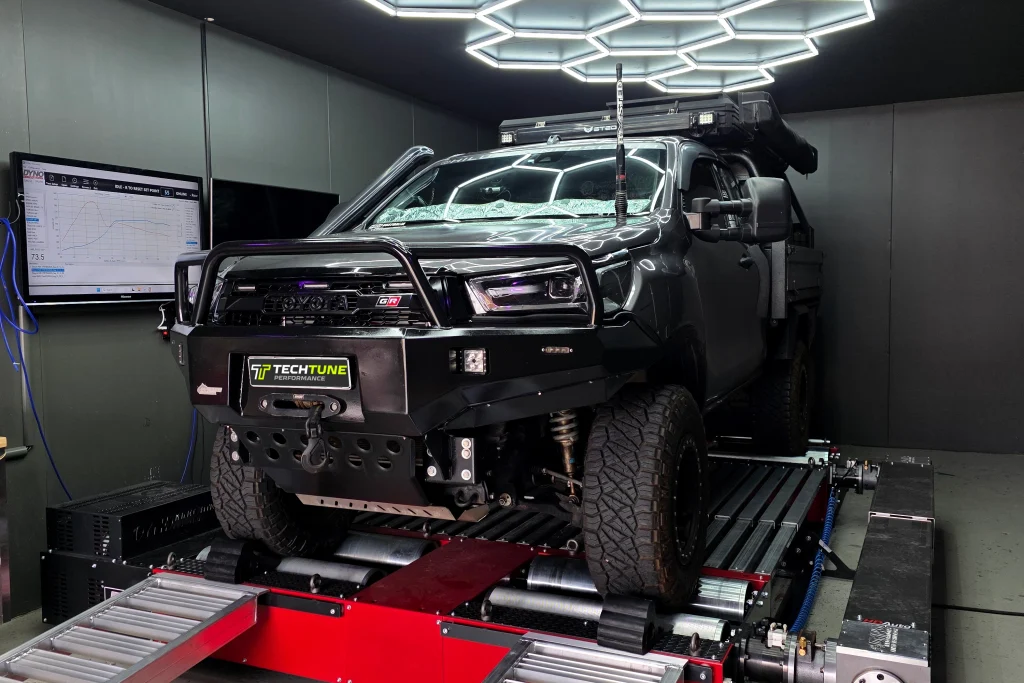
A controlled dynamometer provides a more consistent environment in which the same operating conditions can be repeated and compared.
2. Workshop ECU Reflashing and What It Changes
Workshop ECU reflashing can modify calibration data stored within the factory engine control unit. Depending on the vehicle, this can influence fuel delivery, boost control, ignition or injection timing, torque management, throttle demand and other control strategies.
These systems work together. Increasing boost without considering fuelling, timing, torque limits and thermal behaviour does not automatically create a suitable calibration.
That is why Dyno Tuning should be viewed as more than simply loading a file. The vehicle, its hardware, fuel, intended use and measured behaviour all matter.
The same tune file, same software version, same vehicle and no power changes, or something weird going on? The flashing tool may not have completed the write to the ECU correctly. You can only see this with the dyno. This can be dangerous. Therefore, dyno logged and confirmed. Then different software can be used to correct the write, then supplementary tuning changes applied with the software used which completed the flash correctly. If you’ve had a Carkpark Tune or Tyre shop reflash and you feel something is off, it usually is.
For Carpark Tuning, the important question is whether the calibration has been checked against what the vehicle actually does rather than what a software file is expected to do.
3. Why Stage 1 and Stage 2 Labels Need Care
“Stage 1” and “Stage 2” are commonly used terms, but they are not universal technical specifications. Different tuners can use the same label for substantially different calibration changes.
A customer therefore needs to look beyond the stage number. What has actually been changed? Was the calibration developed for the individual vehicle? Was it tested under load? Were the relevant parameters logged before and after the changes?
With Custom ECU Tuning Perth, the useful distinction is not simply Stage 1 versus Stage 2. It is whether the calibration has been developed around the actual vehicle, its modifications and intended use.
This approach also explains why Carpark Tuning should not be assessed by a stage label alone.
4. Why Dyno Load Testing Matters
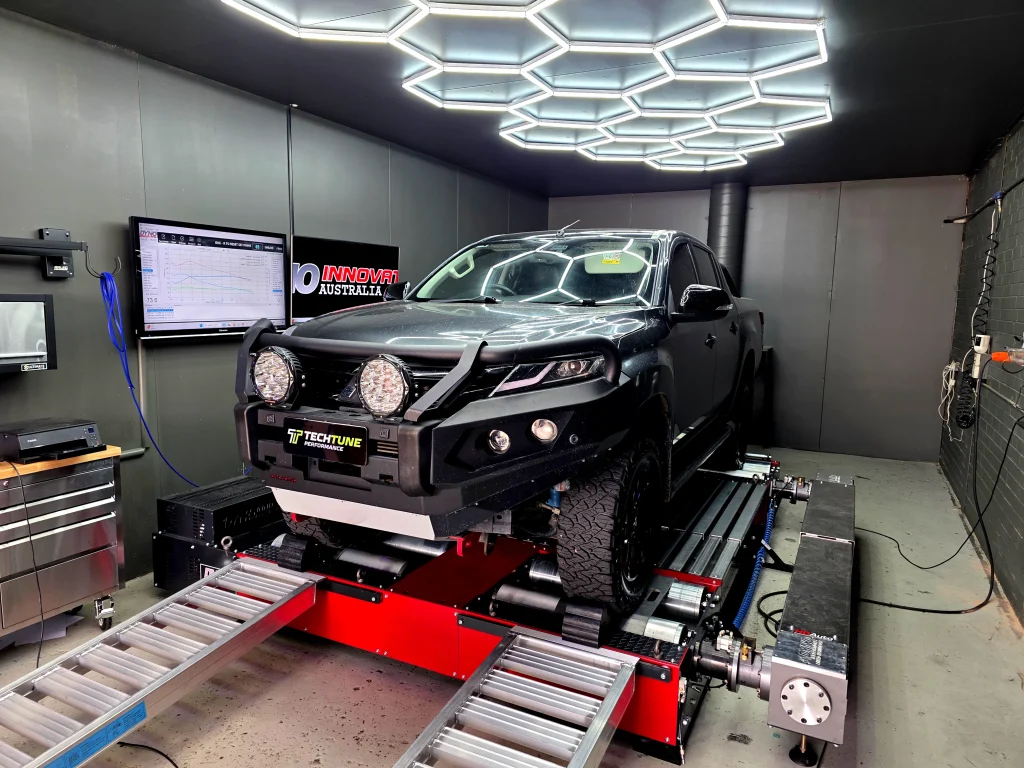
A dynamometer provides a controlled way to apply repeatable load to the vehicle. This makes it possible to establish a baseline and then compare calibration changes against measured results.
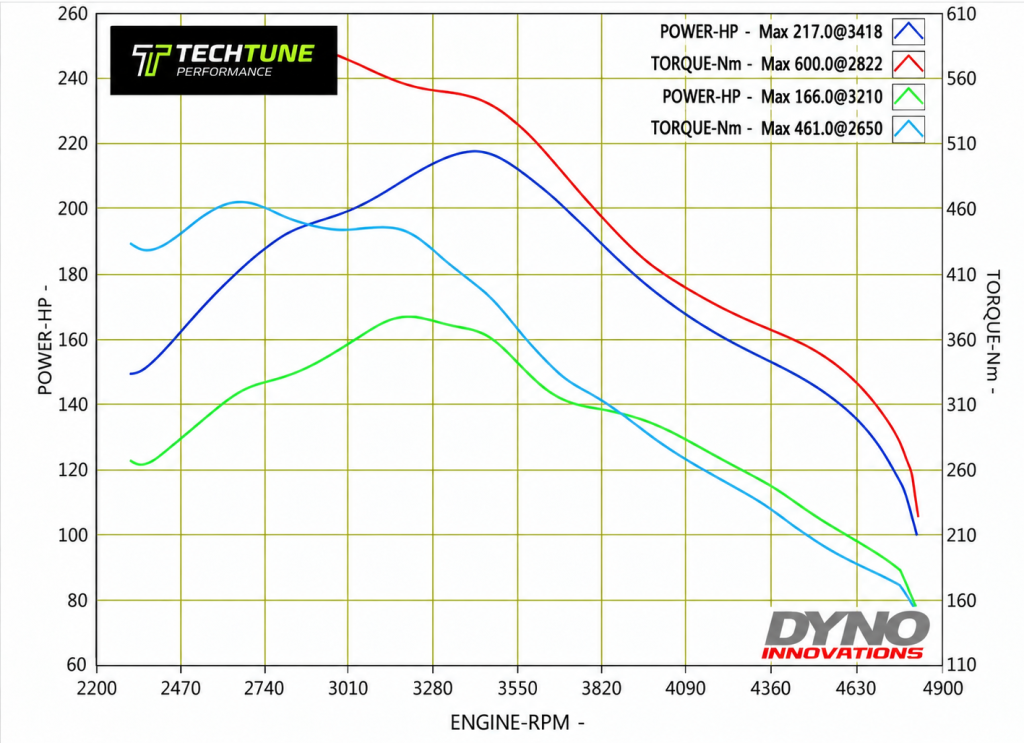
Dyno Testing Perth can provide more information than a peak horsepower figure. The torque curve, boost behaviour, fuelling and other logged channels can be examined through the operating range.
This matters because some issues only become obvious when load increases. A vehicle may behave normally during light driving but respond differently when boost demand, fuel demand and torque request rise together.
For Carpark Tuning, controlled load testing provides a way to investigate those conditions rather than relying entirely on driver feel.
5. What Data Should Be Logged?
A useful dyno and OBD/CAN logging setup can bring multiple channels together. Reviewing them against RPM and load helps show how different parts of the calibration interact.
| Logged channel | What it can help identify |
|---|---|
| Power | Measured output through the run |
| Torque | Where torque is produced or reduced |
| Engine RPM | Reference point for comparing other channels |
| Boost/MAP actual | Pressure the engine is actually producing |
| Boost target | Pressure the ECU is requesting |
| Lambda/AFR | Fuelling behaviour under load |
| Rail pressure actual | Fuel pressure being delivered |
| Rail pressure target | Fuel pressure being requested |
| Ignition/injection timing | Timing behaviour as load increases |
| Throttle/torque intervention | Torque reduction or throttle closure |
ECU Data Logging becomes particularly useful when these channels are considered together. For example, actual boost that does not follow target can mean something different when viewed alongside throttle position, torque demand and fuelling.
6. Boost, Fuelling and Rail Pressure
Boost is only one part of a calibration. Comparing actual boost with the requested target can help identify whether the turbo system is following the intended pressure or moving beyond it.
Fuelling also needs to remain consistent with the engine’s operating conditions. Depending on the platform, lambda or AFR data and fuel rail pressure can provide useful information about the response of the fuel system.
Fuel rail pressure actual versus target is especially relevant on common-rail diesel and direct-injection petrol systems. A significant difference may indicate a control or supply issue that is not obvious during a short road drive.
This is another reason Carpark Tuning needs to be assessed through measured vehicle behaviour rather than a software description alone.
7. Timing, Torque Intervention and Knock
Ignition timing on a petrol engine and injection timing on a diesel engine can affect combustion and engine response. Timing therefore needs to be considered alongside load, boost and fuelling rather than treated as an isolated adjustment.
Modern ECUs can also use torque models and intervention strategies. A driver may request full throttle while the ECU reduces torque through throttle control, fuel quantity, boost or another strategy.
Logging these signals can explain why the vehicle does not deliver the expected response.
Proper knock detection and suitable knock monitoring can also be important on petrol applications. Electronic detection and appropriate listening equipment can provide additional information when assessing combustion behaviour.
8. Heat and Sustained Load
Heat is another reason Vehicle Load Testing matters. A vehicle may complete a short road pull without showing the same thermal behaviour that develops during a longer, sustained load event.
Depending on the vehicle and available sensors, relevant measurements can include exhaust gas temperature, intake temperature, coolant temperature, oil temperature and other parameters.
The objective should not simply be to produce the largest number on a dyno screen. It should be to understand how the vehicle behaves while producing that output and whether the calibration remains consistent across its operating range.
For Dyno Tuning Perth, repeatable load gives the tuner a useful environment for comparing changes and investigating abnormal behaviour.
9. What Problems Can Proper Testing Help Find?
Proper testing can help identify behaviour that may otherwise be missed, including surging, overboost, poor fuelling, torque intervention, excessive heat, limp-mode behaviour and unusual transmission response. We have re-tuned plenty of vehicles where customers have had a Carpark Tune, no logging or power testing was completed. These customers often say “I didn’t feel much of a difference after the previous tune was completed. We have seen some very strange behavior on our dyno to confirm why and make the correct changes to achieve the correct result.
These findings do not automatically mean that component damage will occur. They indicate that further diagnosis or calibration may be required.
If abnormal behaviour continues under high load, however, additional stress may be placed on components such as the turbocharger, engine or transmission. The potential consequences depend on the vehicle, fault and severity of the condition.
This is why Dyno Testing Perth should be understood as part of a measurement and validation process, rather than simply a way to advertise a higher peak power number.
10. What Should Customers Ask Before a Reflash?
Before choosing between Carpark Tuning and a workshop-based calibration service, customers can ask how the vehicle will be tested, whether a baseline will be recorded, what parameters will be logged and whether target values will be compared with actual results.
It is also worth asking whether the calibration is customised to the vehicle, whether it will be tested under sustained load and whether the finished calibration will be checked again after changes are made.
Customers should also consider applicable modification requirements. Western Australian Government guidance explains that vehicles must comply with relevant regulations and Australian Design Rules, while some modifications can require inspection or approval.
For the relevant WA vehicle modification guidance, customers can check the official Transport WA requirements before making changes to a road vehicle.
A properly documented calibration process should provide more useful information than a stage number alone. Baseline results, relevant logs, calibration changes and final validation can show how the vehicle actually responded.
Conclusion
Carpark Tuning is not simply about where an ECU is flashed. The bigger question is whether the vehicle has been properly measured, monitored and validated under load.
A file may look correct on a computer and the vehicle may feel stronger during a short drive, yet the data can reveal a different picture. Boost, fuel pressure, AFR or lambda, timing, torque intervention, temperatures and transmission behaviour can all change as load increases.
This is why Dyno Testing and ECU Data Logging can be valuable parts of a thorough tuning process. A stage label alone cannot explain how a vehicle is behaving across its operating range.
Ask About Dyno Testing before relying on a quick road impression or a Stage 1/Stage 2 description.
TT Performance’s published tuning approach centres on controlled dyno testing, live data logging, map-level calibration and validation around the individual vehicle. If you want to discuss your vehicle’s requirements, modifications and intended use, contact the tuning team for further information.
Frequently Asked Questions
Is carpark tuning the same as dyno tuning?
No. A carpark reflash may involve loading an ECU calibration and checking the vehicle on the road. Dyno tuning provides controlled, repeatable load for measurement, data logging and validation.
Why should Stage 1 and Stage 2 tunes be questioned?
Stage labels are not universal technical standards. The actual calibration changes, vehicle setup, testing method and measured results provide more useful information than the label itself.
What does ECU data logging show?
Depending on the vehicle, ECU data logging can record parameters such as boost, fuel pressure, AFR or lambda, timing, torque requests, throttle behaviour and intervention.
Can a road test replace dyno testing?
A road test is useful for assessing real-world drivability, but it does not provide the same repeatable load conditions as a dynamometer. Both can have a role in a thorough assessment.
Can dyno testing identify tuning problems?
It can help identify issues such as boost deviation, inconsistent fuelling, torque intervention, unusual temperature behaviour and other abnormalities when the relevant data is available.
Ready For A Properly Tested Tune?
Every calibration is developed around your vehicle using controlled dyno load, live data logging and map-level validation before handover.
